Pickled Red Onions

Two two-fers in a row! In the last post, we combined rye and thyme. Today, 3 Messidor, we’re combining onions and cloves (13 Messidor). We’re pickling red onions using a recipe from the always lovely Orangette. This is one of my favorite, most-repeated recipes – up there with Sunday Sauce. Orangette’s recipe calls for multiple dunkings of the onions in the vinegar mix. I usually do it this way, but when pressed for time, have also only dunked the onions once. Both ways are delicious.

Pickled Red Onions 

4 cups white vinegar

2 cups sugar

1 cinnamon stick

4 whole cloves

2 pinches allspice

1 dried chile

2 bay leaves

20 black peppercorns

1 1/2 lbs red onions

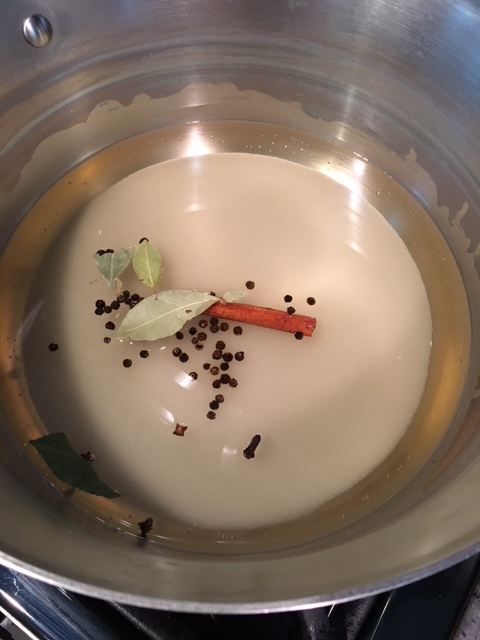
First, slice the onions on a mandolin. Next, in a larger pan, combine all the rest of the ingredients. Bring them to a boil.

You’ll be adding the onions in 1/3 at a time and then removing them to add in the next third, etc. For each third, let the onions submerge in the mixture for about 20 seconds, then remove them from the pot and spread them out on a baking sheet to cool. Add the next batch. Repeat the whole process three times, total.

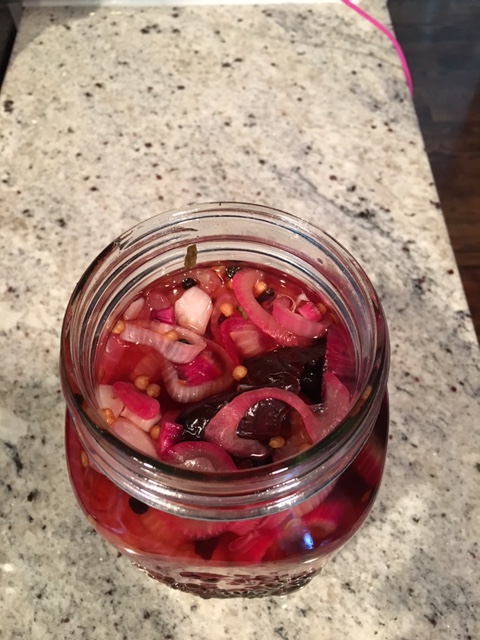
Now, you’ll have all the onions cooling on the baking sheet and the brine still in the pot, but off the heat. Let everything cool down to room temperature and then combine the onions and the brine (and all the bits in the brine) into a large mason jar (or two medium jars). Refrigerate and begin to eat the next day. Enjoy!


IMG_2268IMG_2269IMG_2270

Berry Pie with Rye Crust

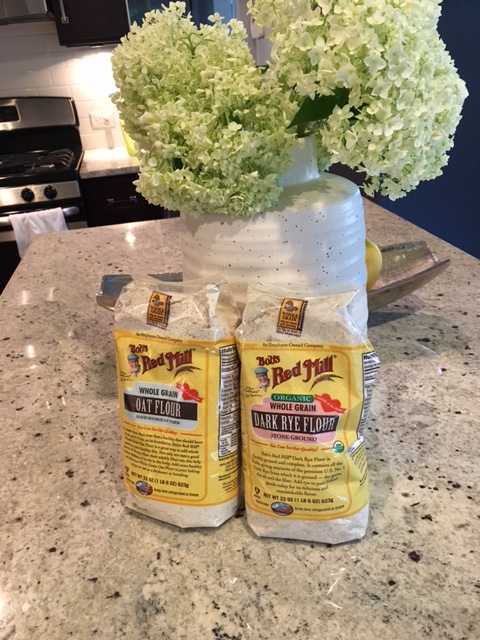
At the hour of our glorious return to cooking the French Republican Calendar, we celebrate rye… and thyme! In a pie! Thyme finishes off Prairial for us (28 Prairial), as we’re skipping peony and hand cart. Then, rye kicks off our next month, Messidor – the harvest.

Today’s recipe comes from the lovely 101cookbooks.com. Rye is used in the crust and thyme is mixed in with the berry filling.

Berry Pie with Rye Crust 

2/3 cup rye flour

1 1/2 cups all-purpose flour

1/4 tsp salt

1 cup butter

1/3 cup cold water or beer

I made the crust in the food processor by mixing the flours and salt together first. Cut up the butter into small pieces and pulse 5 or 6 times in the machine until the butter is well-incorporated. Add the water or beer and pulse again until mixed. Remove and wrap in plastic. Store in the fridge until you’re ready to roll it out for the pan.

Filling

2/3 cups brown sugar

1/3 cup all purpose flour

1/4 tsp salt

1/2 tsp cinnamon

2 sprigs thyme, with leaves removed

2 lbs berries (I used a mix of strawberries, blueberries and raspberries)

2 tbs lemon juice

2 tbs butter

1 egg

Caster sugar

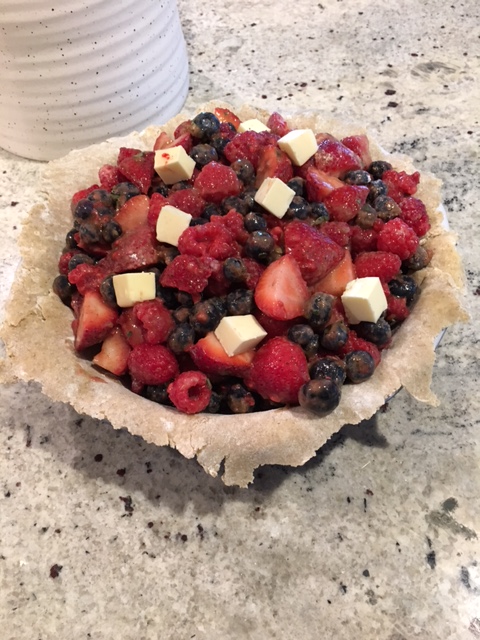
Preheat the oven to 425. Then, mix the brown sugar, flour, salt, cinnamon and thyme in a big bowl. Let it macerate for a few while you roll out the dough. Cut the dough in half and roll out the bottom crust for a 9 inch pie tin. Place the dough in the pie plate and roll out the top crust.

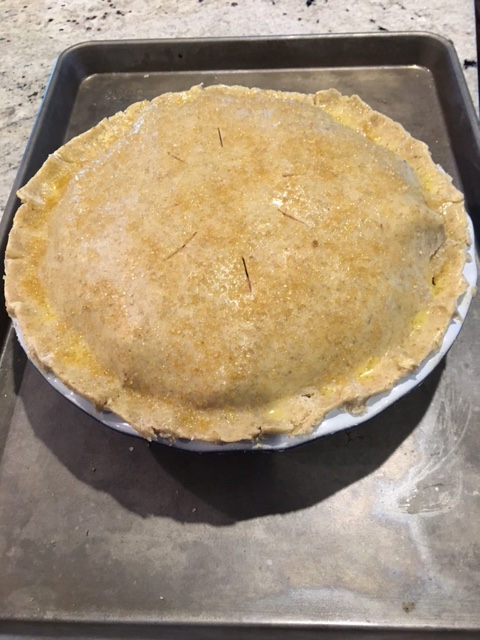
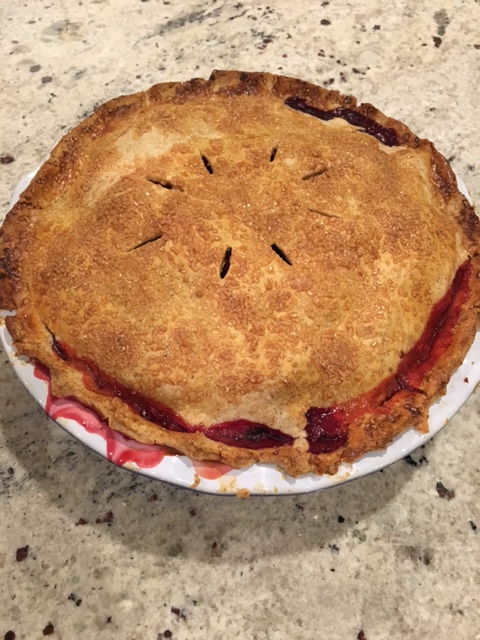
Add the berries to the pie plate and brush some water along the rim of the crust. Add the top crust and press the two crusts together. Brush the top of the pie with a wash of 1 egg beaten with a tablespoon of water. Cut some vents and put the pie in the oven. After 25 minutes of baking, remove the pie and add the caster sugar on top. If the crust is golden brown already, reduce the heat to 350 and cook for another 20 minutes. When the crust is a nice golden brown and the filling is bubbling, remove and let cool. Enjoy!

IMG_2162IMG_2163IMG_2164IMG_2165


Chamomile Cake

Today, 22 Prairial, we celebrate chamomile! This date has inspired me to order some chamomile seeds to plant in the yard for future tea. A quick update on the wasabi root I planted earlier this spring: it definitely died.

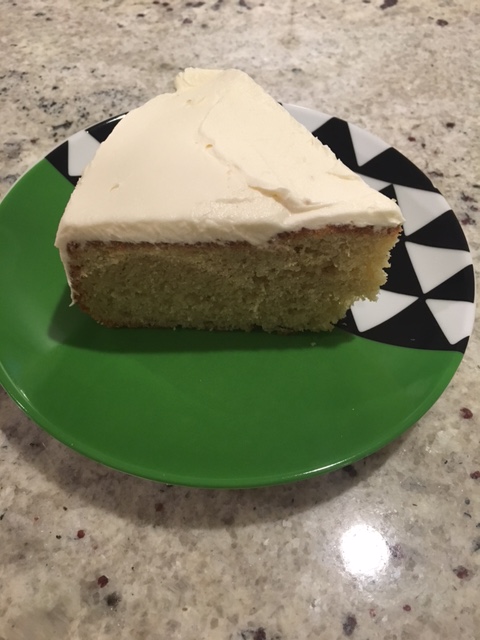
I think this cake was lovely and would be a welcome addition to a low tea get together. It is taken from Kate Hackworthy’s @KateVeggieDesserts which is a marvel of innovative desserts.

Chamomile Cake with Honey Buttercream 

2 sticks of butter

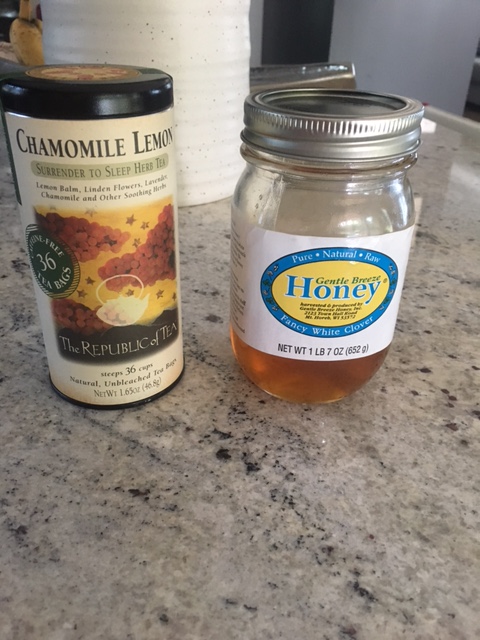
5 chamomile tea bags

1/4 cup of milk

1 cup of sugar

3 eggs

1 tsp vanilla

1 1/2 cup flour

2 tbs baking powder

1/2 tsp salt

Icing 

6 tbs butter at room temperature

2 tbs honey

2 tbs whole milk

1 cup powdered sugar

1/4 tsp salt

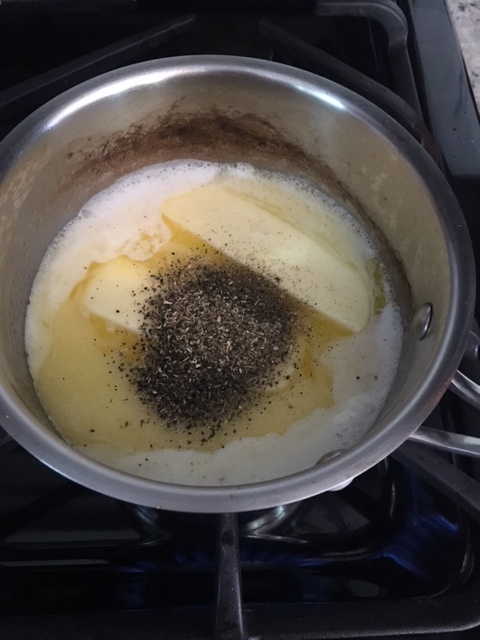
Pre-heat the oven to 350. Prepare a 9 inch pan with cooking spray or butter and flour. In a small saucepan, heat the butter, milk and chamomile tea bags to a light simmer for 2-3 minutes. Turn off the heat and let steep for 10 minutes.

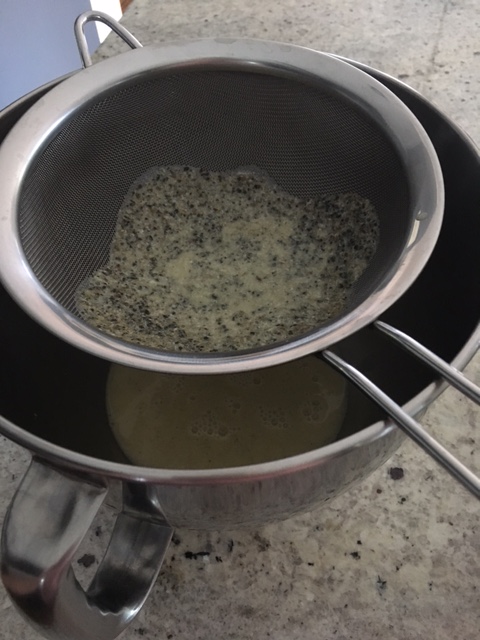
After 10 minutes, strain the mixture over a sieve. Discard the tea bags.

In an electric mixer, beat the butter mixture and sugar until pale and creamy. Add the eggs, one by one. Add the vanilla.

Add the flour, baking powder and salt to the butter mixture and mix until just combined. Pour the batter into the prepared ban and cook for 30-35 minutes. Remove and let cool. Invert onto a platter and make the icing.


For the honey buttercream, beat the butter until pale and creamy. Add the honey, powdered sugar and milk. Mix until smooth and then add the salt and frost the cake when it is completely cooled. Enjoy!


IMG_2131IMG_2133IMG_2134IMG_2136

Toast with Peas

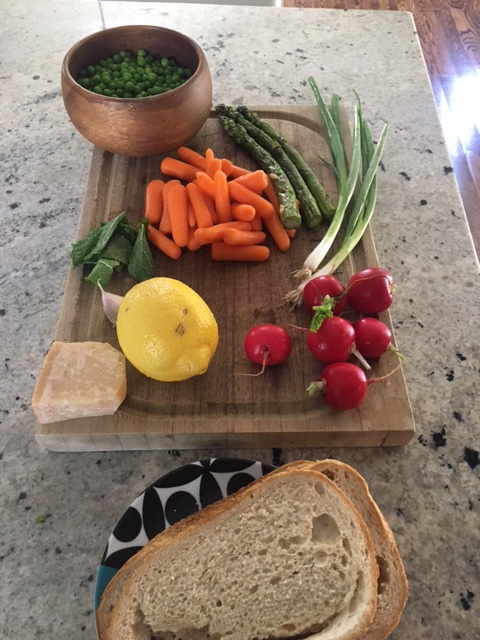
For 13 Prairial, we celebrate the pea! It’s been a hot couple of days, so I went with “not soup” for today’s recipe. Just a couple of veggies and some mashed peas. This is taken from a Bon Apetit recipe, but I switched around some veggies based on family preferences.

1/2 lb of carrots

6 radishes

10 oz frozen peas

1 garlic clove

Zest of one lemon

1 tbs lemon juice

1/4 cup grated Parmesan

Sliced sourdough

1/2 lb asparagus

4 green onions

mint leaves

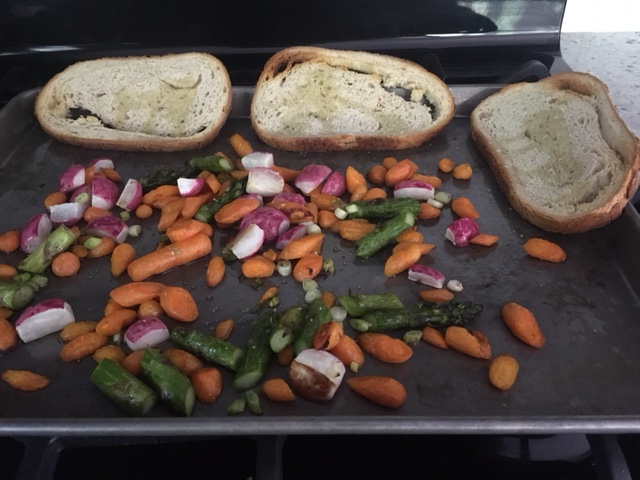
First, slice the carrots, radishes, asparagus and onions. Toss the veggies, except onions, with 2 tablespoons of olive oil and salt and pepper to taste. Bake at 400 for about 15 minutes.

In a food processor, mix the peas, garlic, lemon zest, lemon juice, Parmesan and salt and pepper to taste. Mix until mostly smooth. Drizzle some olive oil over the bread slices and when the veggies have cooked for 15 minutes, remove the pan and arrange the bread on the edge of the pan. Add the onions to the pan and cook for another 10 minutes.

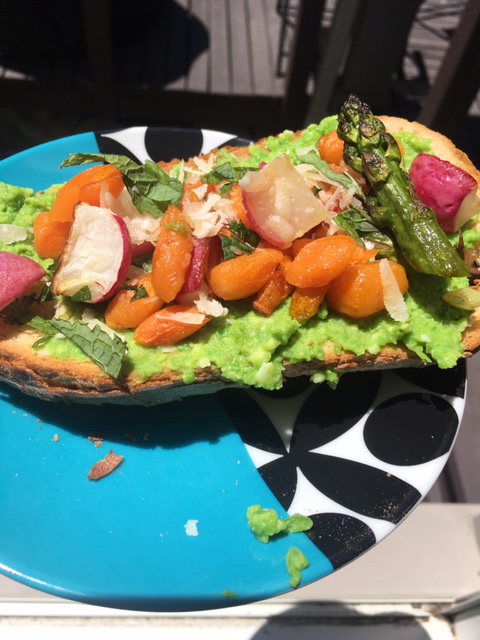
To serve, spread the peas over the toasted bread, top with vegetables and mint. Enjoy!

IMG_2111IMG_2112IMG_2113

Elderberry Cocktail

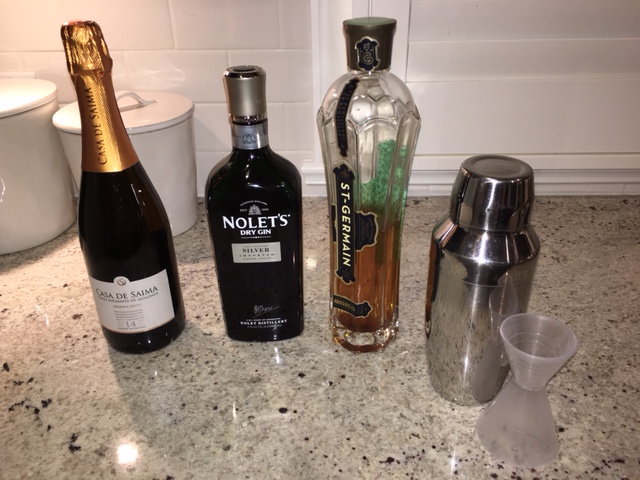
We’re doing a little bit of skipping and heading on to 17 Prairial before doubling back to peas in our next post. Today, we celebrate the elderberry with a cocktail using St. Germain. Up until last year, I had foolishly thought that the liqueur was as storied as its art deco bottle. I was surprised to discover when reading about the inventor’s death in 2016 that St. Germain has only been on the market since 2007. The liqueur is made not from the elderberry, but from the very fragrant blossoms of the tree. To celebrate, I have made a cocktail that I have enjoyed for the past five years – ever since I read the recipe for it on The Kitchn. They had a series celebrating Downton Abbey in 2012 where each of the three sisters received their own cocktail. This is the Lady Sybil. For me, it ranks up there as one of my favorite cocktails to make and drink – a close second to the Gin Bennet.

The Lady Sybil 

1 oz gin

1/2 oz St. Germain

Chilled brut Champagne (I use cava, usually)

Combine the Gin and St. Germain in a cocktail shaker with ice. Shake until chilled. Pour into coupe or flute and top off with Champagne. Long live Lady Sybil!

IMG_2108IMG_2109

Strawberry Ice Cream

Mes amis, on this day of Prairial, we celebrate the strawberry as the French Revolutionaries would surely have wanted – with ice cream. In looking through past posts, I was sure that I had written about the etymology of “strawberry” before, but apparently not! All my strawberry research so far has been off the clock. No longer. Last summer, we planted strawberry plants for the first time in our garden and wondered about the origin of the word. Turns out, it is up for debate. A lovely article by Anatoly Liberman from the Oxford University Press blog details many theories.

The double trouble with strawberry is that no other European language has a similar name (one late occurrence in Swedish is of unknown provenance) and that, on the face of it, straw– makes little sense in it. The word goes back to Old English, and there must have been a serious reason for coining it or for changing the traditional denomination (that is, “earth-berry,” which did turn up at that time but, judging by the extant texts, was known very little). One thing is clear: the Germanic invaders of Great Britain did not bring the word strawberry to their new homeland from the continent.

Here are some of the options:

  1. The “straw” is derived from “strew,” which describes how the berries send out runners in a mess of different directions. So, perhaps at one time, they were “strewberries.” Liberman rejects this interpretation as it would have been unlikely the first part of the word would have been a verb.
  2. When cultivated, gardeners usually use straw for mulching the plants during the winter. Liberman rejects this because before strawberries were cultivated, they were popularly harvested in the wild.
  3. The “seeds” of the berry could, perhaps, look like straw. This is the etymology favored by the OED, according to Liberman.
  4. The tendrils that connect the new runner daughter plants to the mother plant could look like thin straws.
  5. Perhaps a derivation of “strayberry” – describing the wandering nature of the runners.
  6. Finally, a puzzler (to me) – a corruption of the Norwegian word for the berry, smultron. 

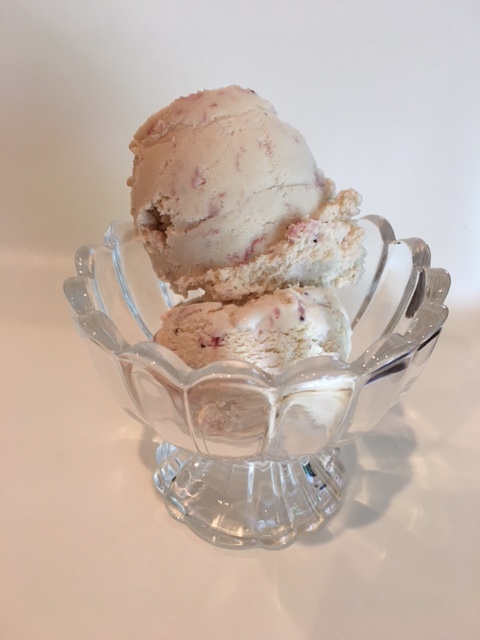
As there are options for the origin of the berry, so are there options for recipes to make on this hallowed day. I combined two ice cream recipes – Jenni’s Splendid Ice Creams idea for roasting the strawberries and David Lebovitz‘s vanilla ice cream base.

Roasted Strawberry Ice Cream 

1 pint of strawberries

1 cup whole milk

3/4 cup sugar

2 cups heavy cream

pinch of salt

6 large egg yolks

3/4 tsp of vanilla extract

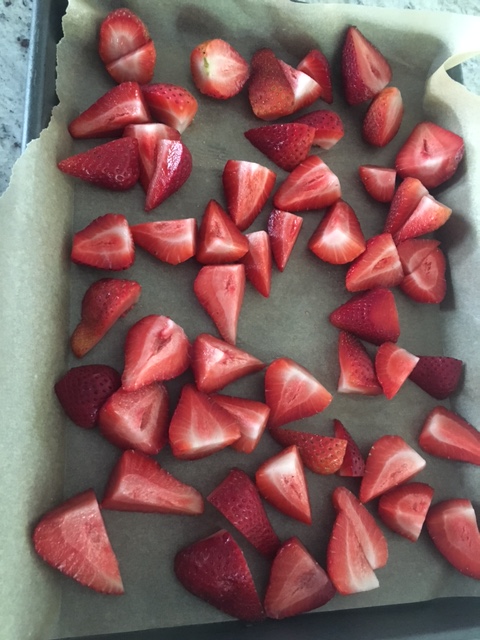
First, clean the strawberries and cut into quarters. Line a baking sheet with parchment and cook at 350 for 10 – 15 minutes. Let cool while you make the ice cream base. Warm the milk, 1 cup of cream and the sugar in a medium pan. In a bowl, pour the remaining cup of cream and place a strainer on top of the bowl. Separate the eggs and slowly add some of the hot milk mixture to the eggs to temper. Pour the eggs into the milk mixture and cook while whisking constantly. When the mixture is thickened, pour into the bowl through the strainer and add the reserved strawberries. Cool overnight and then freeze in your ice cream maker the next morning. Enjoy!

IMG_2094IMG_2103

Roast Duck with Cherries

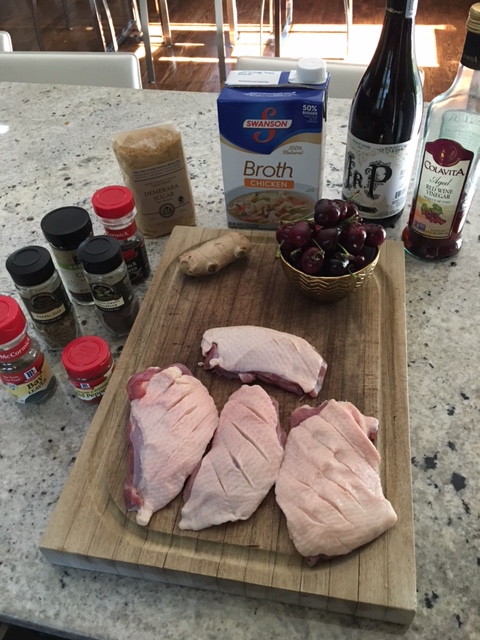
Welcome to the month of Prairial! On the 5th day of this month, Jacobins celebrated the duck. We shall celebrate with a decadent summer dish of roast duck with fresh cherries. I very much enjoyed this recipe, which is from the New York Times – spicy and sweet, and very satisfying. It calls for using 2 Muscovy duck breasts, but the cheapest I found were $72 for two breasts. While searching at Whole Foods, I found 4 non-Muscovy breasts for $13 and went with those. Turns out, Muscovy ducks are native to Central and South America and look kind of crazy. They are supposed to have a taste more similar to roast beef and are very tender.

Roast Duck with Cherries 

Rub for the Duck 

2 duck breasts

salt

1 tsp peppercorns

1/2 tsp ground allspice

4 cloves

2 bay leaves

1/2 tsp fennel

For the sauce

1/4 raw sugar

1/2 cup red wine vinegar

1/2 cup red wine (I used pinot noir)

1 cup chicken broth

1 tbs grated ginger

pinch of cayenne

salt

2 tbs butter

1/2 fresh cherries, pitted and halved

2 tsp granulated sugar

1 tbs brandy

First, score the fatty side of the breast with a light crosshatch pattern. Salt both sides of the meat. Then, grind the peppercorns, allspice, bay leaves and fennel for the rub. Massage the rub on to both sides of the breasts and then refrigerate for several hours.

For the sauce, combine the raw sugar and red wine vinegar in a saucepan and simmer at medium-high for two minutes, until slightly thickened. Add the wine and broth and simmer for about 5 minutes. Add teh ginger, cayenne and 1/2 tsp of salt.

To cook the duck, heat a wide pan over medium heat. When hot, add the duck, skin side down. Cook for about seven minutes, until the skin is crispy making sure that the skin does not get too dark. Turn the meat over and cook for another 5 to 7 minutes. Remove and let the meat rest for about 10 minutes.

To complete the sauce, in a separate pan add the butter, cherries and granulated sugar. Cook for 2 to 3 minutes, until sugar dissolves. Add the brandy, cook one more minute, then add this to the previously made sauce and heat through.

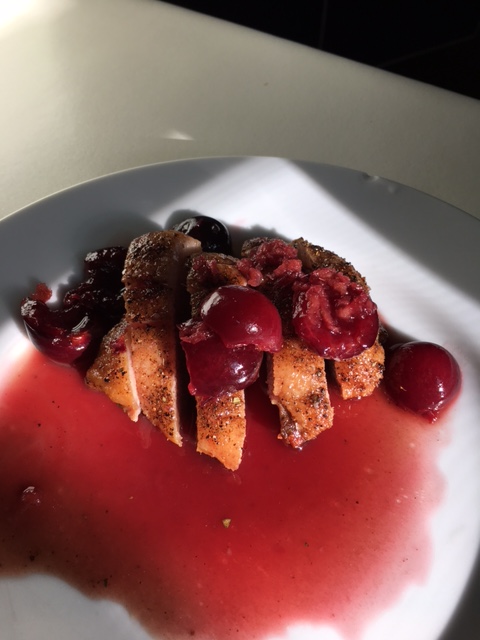
Slice the breasts on a platter and top with the sauce and cherries. Enjoy!

IMG_2059IMG_2060


Carrots and Chives

Dearest, most treasured readers,

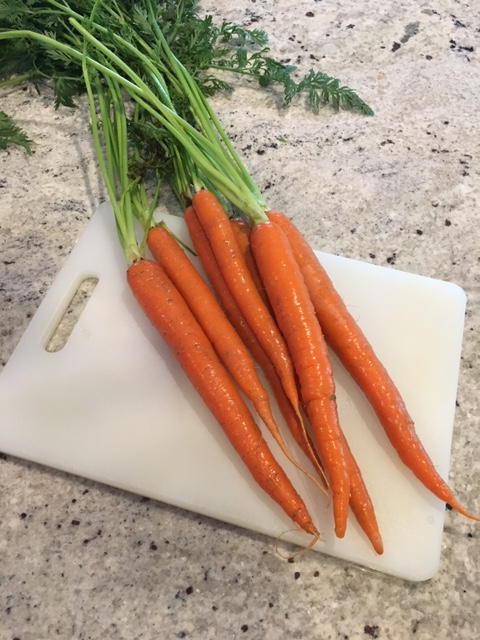
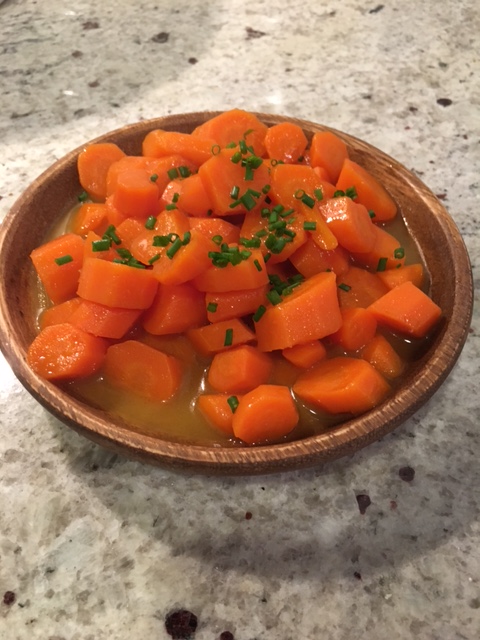
Apologies for the unexpected break from the business of blogging about the food of the French Republican Calendar. I return today with a few backlogged dishes. On 27 Floréal, we celebrated chives! My thoughts turned to chive soup, then quickly away from chive soup. Instead, I made a delightfully spring-y dish with chives from our garden.

Glazed Carrots and Chives

1 lb of carrots, peeled and cut in 1/2 inch pieces

2 tbs butter

1 cup chicken stock

2 tbs sugar

1 tbs diced chives

salt and pepper

First, bring the chicken stock, and butter to a simmer in a medium pot. Add the chopped carrots and cook on medium, covered, until the carrots are tender – around 10 minutes. Uncover and add the sugar. Cook for another 2 to 3 minutes until the sugar has dissolved. Add the chives and enjoy!

IMG_2013

IMG_2014

Chive blossom!

IMG_2015

Green Bean Casserole

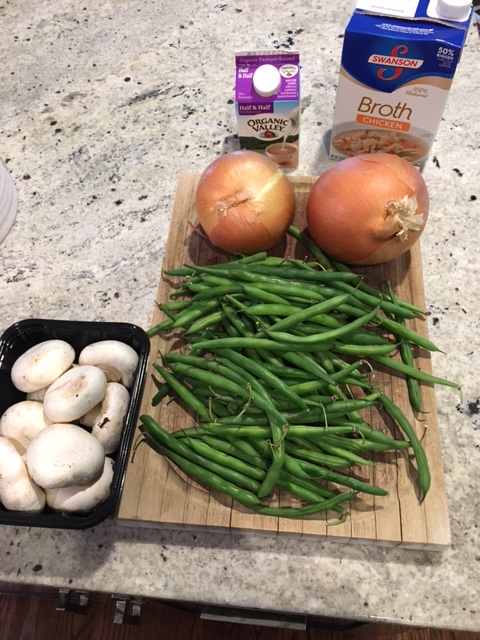
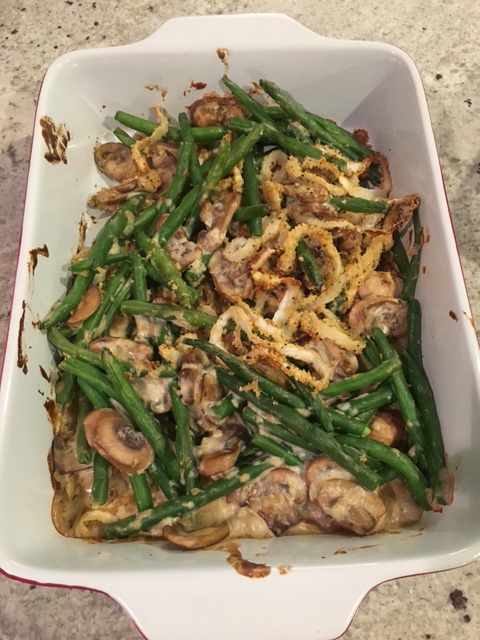
For Button Mushroom day, I’m making one of my most enjoyed recipes of… all time? I make this *not* just around Thanksgiving (5 Frimaire) but all year long.  It was one of the only vegetables my then-one year old would eat, so there was a time when I was making this once a week. The recipe is pretty simple except for the onion topping. I’ve always used Alton Brown’s recipe, but have developed a hybrid onion variation that involves some baking and some frying. I’ve included both variations so you, gentle reader, can choose to do one, the other, or both. Granted, button mushrooms are not really the star of this dish, but play a vital role, I assure you. And, did you know that button mushrooms are simply young portobellos? I didn’t.

Green Bean Casserole 

Beans and sauce

1 lb fresh green beans, trimmed

2 tbs butter

12 oz button mushrooms, sliced

2 cloves garlic, minced

1/4 tsp nutmeg

2 tbs all purpose flour

1 cup chicken broth

1 cup half-and-half

Topping, 2 ways 

2 medium onions, sliced on a mandolin

Baking

1/4 cup milk

1/2 cup panko

1 tsp salt

Frying

1 egg yolk

1/2 tsp salt

1 1/2 cups club soda

1 1/4 cups rice flour

Safflower oil for frying

First, preheat the oven to 350. Bring a pot of salted water to boil and boil the green beans for 3-4 minutes, until they turn bright green. Remove with a slotted spoon and reserve in a bowl of ice water.

Next, the sauce. Melt two tablespoons of butter in a large skillet. Add the mushrooms, some salt and pepper and cook over medium for about 4 to 5 minutes. Add garlic and nutmeg and cook for another minute. Add the two tablespoons of all purpose flour and stir. Cook for another minute or so and add the chicken broth and half. Simmer for a few minutes until the mixture thickens.

Place the cooled and drained green beans in a casserole dish and add the cream of mushroom soup you just made. Stir to combine and set aside.

Now, for the onions. If you are going to bake the onions, pour the milk into a medium bowl and the panko and salt into another bowl. In batches, wet the onions in the milk and then coat with the panko. Spread them on a large baking sheet that has been lined with parchment or a silpat. Bake until they start to turn golden brown about 20 minutes.

To fry the onions and get a crispier texture, heat up about two inches of safflower oil in a large pot. Mix the rice flour, salt, club soda and egg yolk in a medium bowl. When the oil is hot enough to fry, start dipping the onions into the rice flour mixture and dropping them into the oil with a spider or slotted spoon. Fry until golden brown and remove to a paper lined plate.

Once the onions are done, take about a half cup of onions and mix them into the green bean mixture. Top with the remaining onions. Bake the dish at 350 until bubbly, about 15 minutes. Enjoy!


IMG_1995IMG_1998

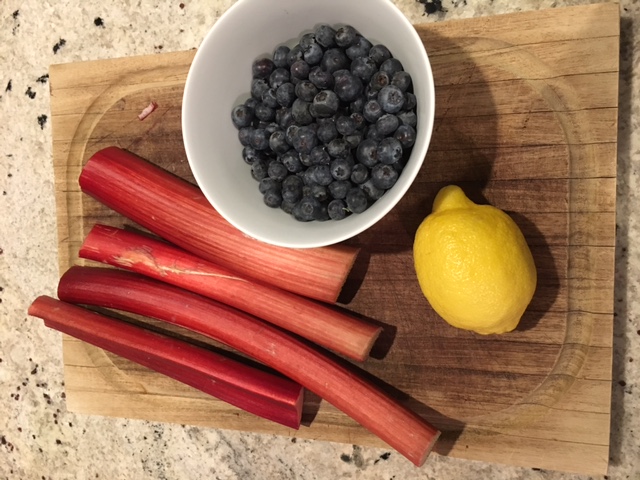
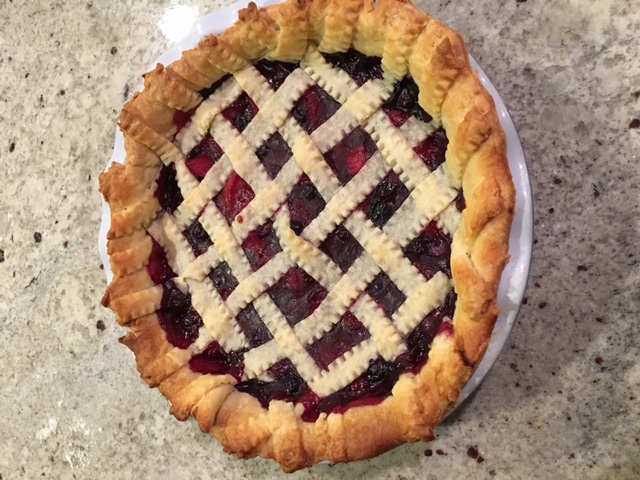
Rhubarb Blueberry Pie

Happy Rhubarb day! For 11 Floréal, we are celebrating the pie plant. David Lebovitz has an anecdote in Ready for Dessert about shopping in a French market and purchasing rhubarb only to have several French ladies instruct him that rhubarb absolutement must be peeled. For today’s dish, I am adapting Rose Levy Beranbaum‘s BluRhu Pie from her Baking Bible.

Rhubarb Blueberry Pie 

Pie crust (enough for the tin and a lattice crust)

1/2 cup plus 1 tbs of sugar

1 tbs plus 21/4 tsp cornstarch

1 tsp lemon zest

pinch of salt

1/4 cup water

1 1/4 cup blueberries

2 1/4 cup fresh rhubarb, cut into 1/2 inch pieces

Add all the ingredients for the filling to a medium saucepan and cook over medium heat until it reaches a boil. Simmer for a minute. Let the mixture cool and then pour it into the dough-lined pie tin. Cover with the lattice and brush the crust with some milk. Cook for 15 minutes at 425 and then lower the temperature to 350 and cook until the rhubarb mixture starts bubbling (20 – 30 minutes more). Let the pie cool completely before cutting into it. Enjoy!

IMG_1979IMG_1980