Hot Toddy

Just as we are about to begin the new year in a Gregorian sense, the Jacobins are beginning the month of Nivôse – Snowy. Back when I began this recipe blog, I gave future months a quick glance to see if creating recipes for most days in a month was a possibility. Turns out, I definitely skipped over Nivôse in that preparatory stage. Every other month of the 10-month year celebrates an array of animals, agricultural tools, fruits and vegetables. Nivôse is dedicated nearly solely to minerals. Fabre d’Egalitine (via Wikipedia) puts it this way:

As the calendar is something that we use so often, we must take advantage of this frequency of use to put elementary notions of agriculture before the people — to show the richness of nature, to make them love the fields, and to methodically show them the order of the influences of the heavens and of the products of the earth.

[…]

So we have arranged in the column of each month, the names of the real treasures of the rural economy. The grains, the pastures, the trees, the roots, the flowers, the fruits, the plants are arranged in the calendar, in such a way that the place and the day of the month that each product occupies is precisely the season and the day that Nature presents it to us.

So, it certainly makes a great deal of sense that late December/ most of January could not be filled with flora and fauna. Even the animals of this month are the least edible (in my opinion): dog, rabbit and cat. As such, I’ve decided to take much more creative license than previous months in coming up with recipes to honor and celebrate the items of the month of Nivôse. Today, 1 Nivôse, is Peat Day. I’m choosing to focus on peaty Scotch and have used a little bit of it in a hot Scotch cocktail. I did not know until preparing this very post that the peat flavor in Scotch comes from drying the barley over peat fires. Please note: I know nothing about Scotch that doesn’t come from Outlander or this Nick Offerman music video (bonus: several scenes with peat!)

So, stay tuned to see how tangentially I can link recipes to various minerals this month!

Hot Toddy 

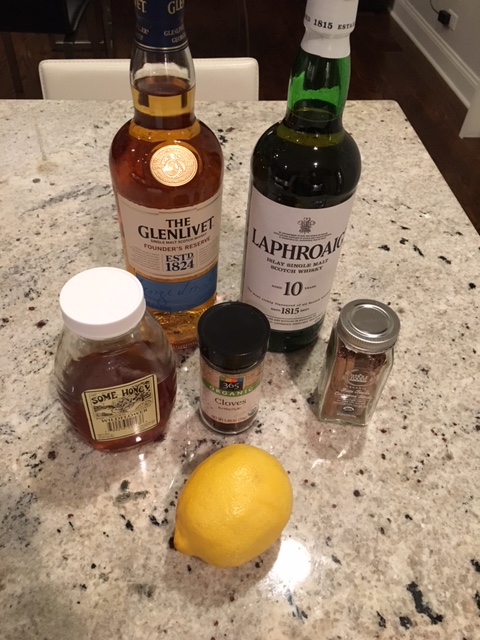
1/2 ounce of a peaty Scotch (I used Laphroaig 10 year)

2 ounces of a not peaty Scotch (I used Glenlivet)

1 tsp honey

2 cloves

1 cinnamon stick

1 lemon slice

as much hot water as you would like

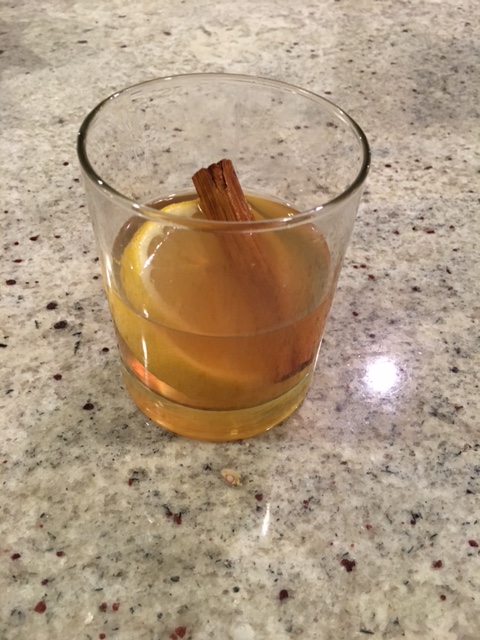
First, set some water to boil. Then, put the honey in your glass and pour the hot water over it, mixing to dissolve. Then, add the Scotches, cloves, cinnamon stick and lemon slice. Enjoy!
img_1667img_1669

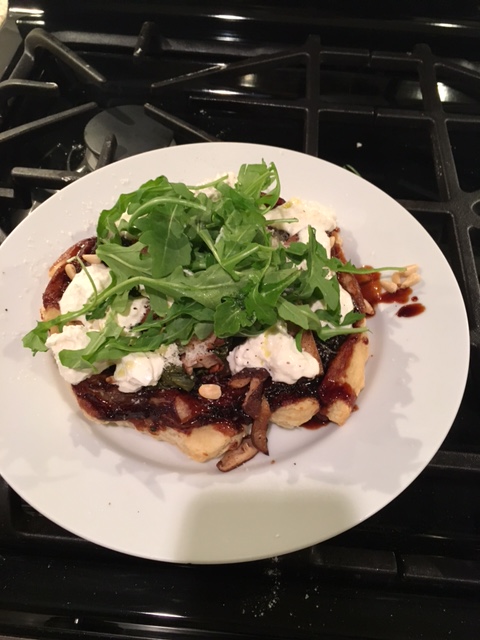
Sorrel and Pine Nut Tarte Tatin

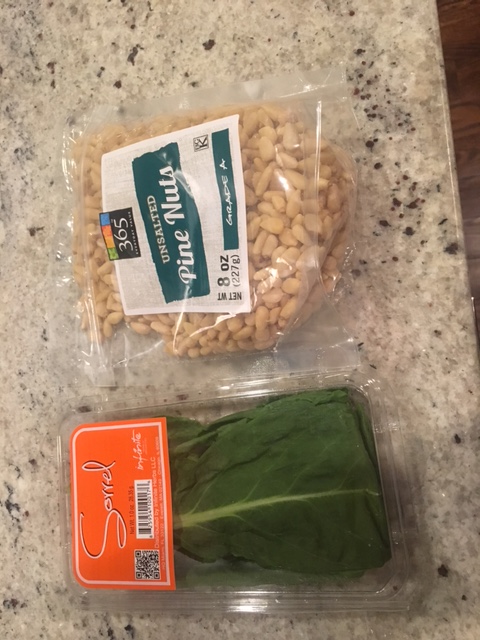
In what may be a first in Eat the Revolution history, today’s recipe is a two-fer. We are celebrating *both* sorrel (24 Frimaire) and pine nuts (26 Frimaire). To do so, we are skipping over heather, reeds and crickets.

I’m adapting a Bon Apetit recipe for a Shallot Tarte Tatin. I was surprised to see sorrel so late in the season, but it apparently grows heartily from spring to very late fall. And, indeed, there was some at the grocery store. Wikipedia says that U.S. harvesting of pine nuts is limited to Native American Tribes. At the Great Basin National Park in Nevada, all are allowed to harvest pine nuts, provided they harvest 25 pounds or less.

Sorrel and Pine Nut Tarte Tatin 

1 tbs of pine nuts, toasted

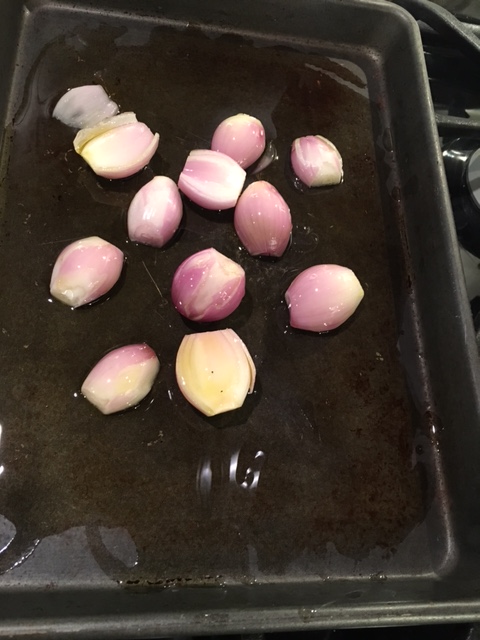
6 large shallots

2 tsp vegetable oil

1/4 cup balsamic vinegar

1 tsp sugar

3 tbs butter, divided

1 package frozen puff pastry

8 ounces mushrooms, chopped

1 garlic clove

3 ounces burrata

1/4 cup sorrel

1 cup baby arugula

2 tbs shaved Parmesan

1 lemon wedge

Preheat the oven to 400. In a small baking sheet, toss the peeled shallots with some olive oil, salt and pepper. Roast for 20 minutes. While those are roasting, toast the pine nuts for a few minutes in a dry pan. In a small pan that can be transferred to the oven, simmer the vinegar and sugar for about 5 minutes and then add in a tablespoon of butter and remove it from the heat. Place the roasted shallots in the vinegar sauce.

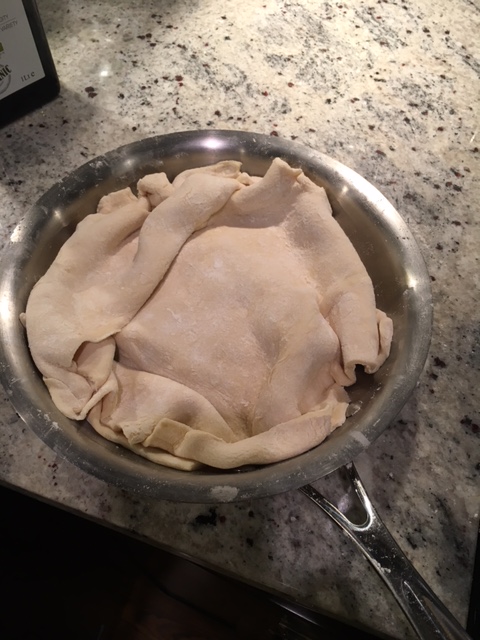
Roll out the puff pastry (don’t use both layers if you bought a box with two). Cut out a circle slightly bigger than the shallot/vinegar pan and place it over the shallots. Bake for 25-30 minutes.

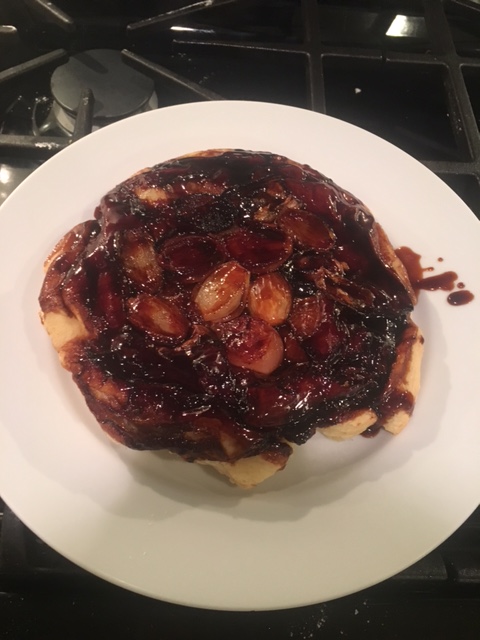
While that is cooking, heat two tablespoons of butter in a medium skillet and cook the garlic and mushrooms for about 5 minutes. Add the sorrel and cook for another three minutes. Season with salt and pepper. When the pastry is finished cooking, invert it onto a plate and arrange the mushroom/sorrel mixture on top. Then, strew the Parmesan, burrata, arugula and nuts. Drizzle some olive oil and lemon juice and salt, if needed.

img_1648img_1646img_1647img_1649img_1650img_1651

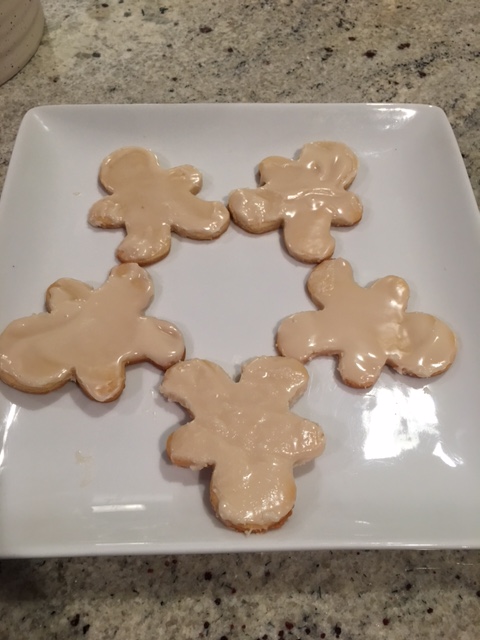
Maple Cookies

To celebrate Maple day of Frimaire, I initially made a maple fudge + chocolate shortbread bar type deal, but did not enjoy it. I thought briefly about making a maple pie (basically a maple flavored custard), but then settled on brown butter maple cookies. Did you know that maple trees make great bonsai?

Maple cookies with brown butter 

2 1/2 sticks butter

3 1/4 cups flour

1 1/2 tsp baking powder

1/2 tsp salt

1 cup sugar

1 large egg

1 tbs milk

2 1/2 tsp vanilla

1 cup powdered sugar

2-3 tbs maple syrup

First, brown the butter. Heat the butter in a medium pan. Have a strainer with cheesecloth ready over a bowl. When the butter just starts to brown, pour it over the strainer. In a separate bowl, mix the flour, powder and salt. In an electric mixer, whisk the butter and sugar until creamed. Add the egg, milk and vanilla and when mixed, add the flour mixture. When just combined, wrap the dough in plastic wrap and stick it in the fridge until cool. Then, make the maple icing by mixing the powdered sugar and the syrup until you get the right consistency. Roll out the dough and cook at 375. Ice and enjoy!

img_1634

Gin Bennet

On 19 Frimaire, we celebrate the Savin Juniper. This is the second juniper the Jacobins celebrate during this month of the French Republican Calendar and I’m a little flummoxed as to why. Savin Junipers appear to be ornamental juniper trees and are seemingly poisonous.

We have skipped over a few days to get to Savin Juniper of Frimaire. They are: cedar tree, fir tree, roe deer, gorse (a flowering evergreen), cypress tree and ivy.

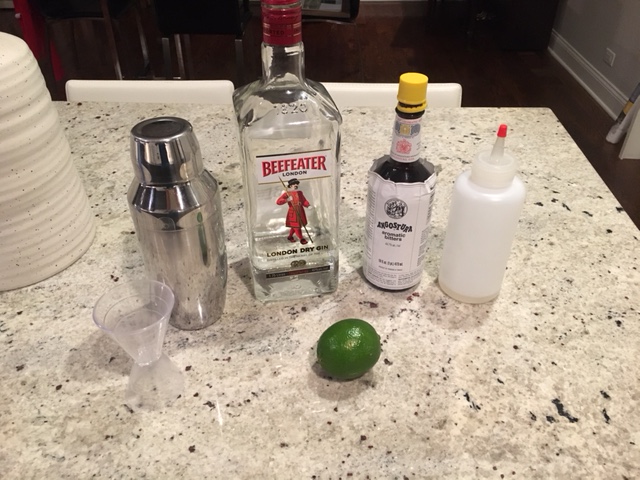
My recipe today utilizes regular juniper in the form of sweet, sweet gin. I present to you, dear reader, mes amis, the perfect cocktail: The Gin Bennett. The history of the Gin Bennett is a little thin on the internet, but a 1922 book Cocktails – How to Mix Them states:

This cocktail, which is very popular in Chili, is called after the well-known and popular landowner and millionaire of that country.

I could not find any famous Bennetts of Chile, despite the most cursory of internet searches. Now is the perfect time to enjoy Bennetts because limes are in season. Infinite h/t to Liz for introducing the cocktail to us.

Gin Bennett 

2 ounces gin

1 ounce lime juice

1 ounce simple syrup

2 dashes Angostura Bitters

Combine all the ingredients with ice in a shaker and shake vigorously. Enjoy!

img_1610img_1611

Horseradish Mash

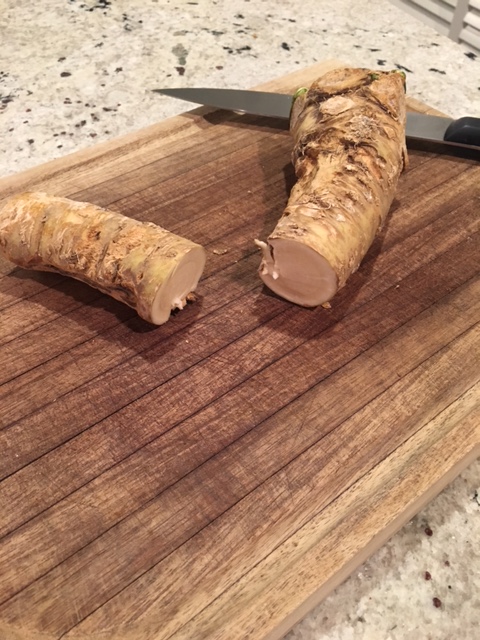
On Horseradish day of Frosty Month of the French Republican calendar, I present to you the following: all wasabi you have ever eaten has been horseradish dyed green. Now, all I want in life is to taste real wasabi. This place seems fairly legit, so I am going to try and grow wasabi next summer.

To celebrate fake wasabi, I have prepared horseradish two ways. The first is a simple mashed potato dish with added fresh-grated horseradish inspired by Hugh Fearnely-Whittingstall’s Meat. The second is a condiment of creamed horseradish from The New Midwestern Table by Amy Thielen.

Horseradish Mash

2 lbs potatoes

1 cup whole milk

1 stick of butter

2 tbs grated horseradish

salt and pepper to taste

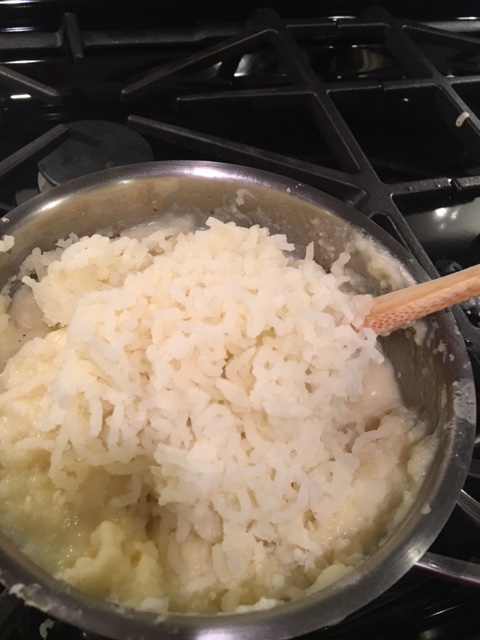
I take the lazy man’s approach to mashed potatoes and peel the potatoes first and also cut them in half so they’ll cook faster. Hugh says to boil them skin-on and cook until they are just tender, then drain in a colander and let the potatoes sit in the colander with a dish towel on top so that they dry out a bit (the key to a good mash, according to Hugh). While the potatoes are cooking, in a separate pan, heat the milk, butter, horseradish, salt and pepper. When the potatoes are ready, put them through a ricer or food mill directly into the hot milk. Mix, and you’ll have some hot mashed potatoes.

Creamed Horseradish

1 cup of freshly grated horseradish

2/3 cup heavy cream

1/4 tsp fine sea salt

1 1/2 tsp sugar

2 tsp rice vinegar

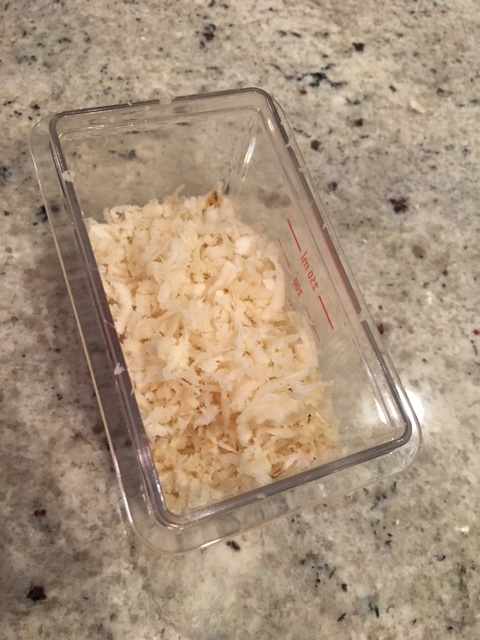
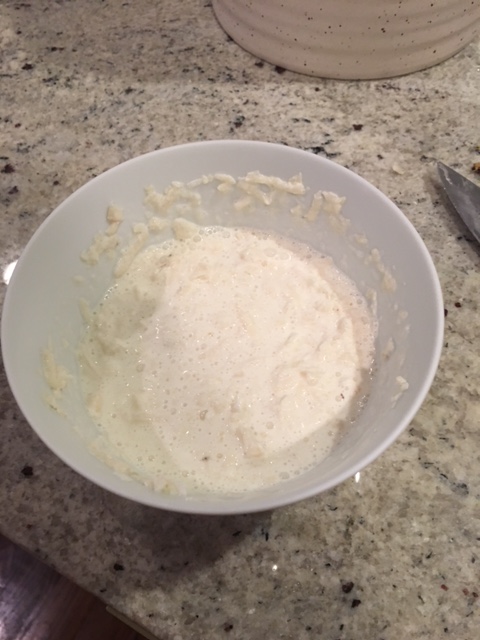
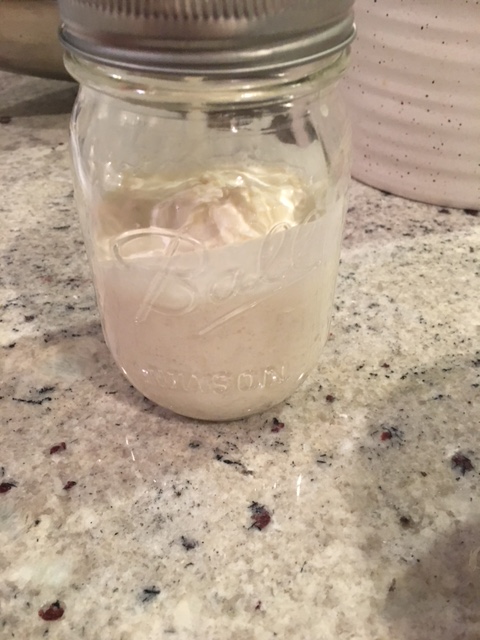
Combine all the ingredients in a bowl and then pack in a clean glass jar and refrigerate.

img_1603img_1604img_1605img_1606img_1607

Honey Ginger Ice Cream

Today, on 11 Frimaire, we are to celebrate wax (cire). We’ve skipped over pickaxe day. I’ve decided to think of today in terms of edible wax, as in beeswax. But, I have not made a recipe using beeswax! Instead, I’m turning a winter tea flavor into an ice cream. This is a recipe of my own creation.

Honey Ginger Ice Cream

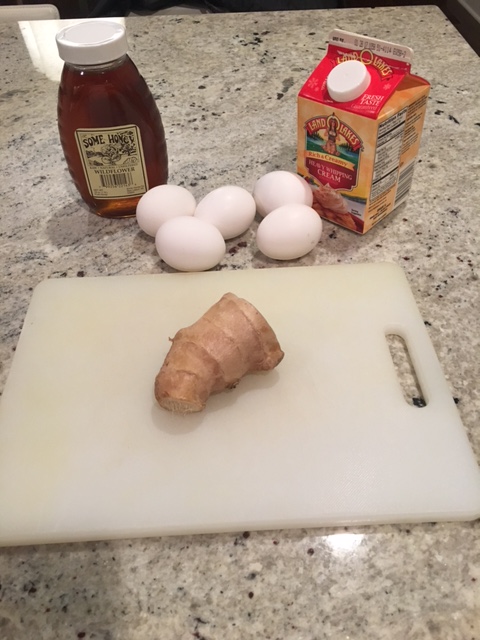
1/2 cup honey

2 inch nub of ginger

1 1/2 cups whole milk

1/4 cup sugar

pinch of salt

1 1/2 cups heavy cream

5 large egg yolks.

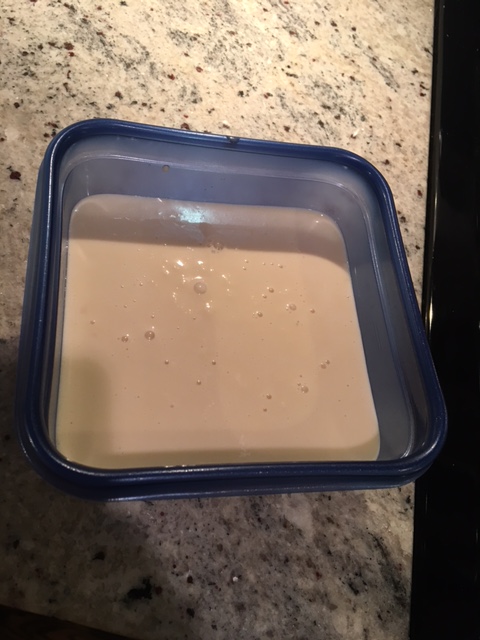
First, chop the ginger into large slivers. Warm the whole milk, sugar, salt and ginger in a medium pan. In a separate bowl, whisk the egg yolks. Temper the yolks by slowly whisking in some of the warmed milk mixture. Then, pour the yolks into the milk mixture. Cook over medium heat until the mixture is thickened. Remove from heat and add the honey and the heavy cream. Chill the mixture overnight and then strain it before putting it into your ice cream maker (if using one).

img_1602img_1608


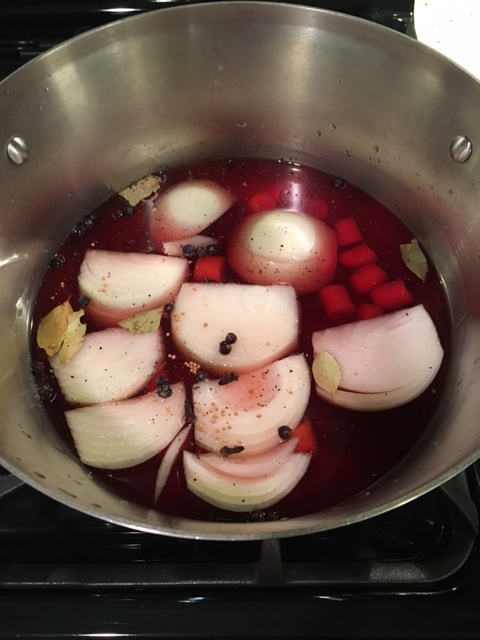
Sauerbraten

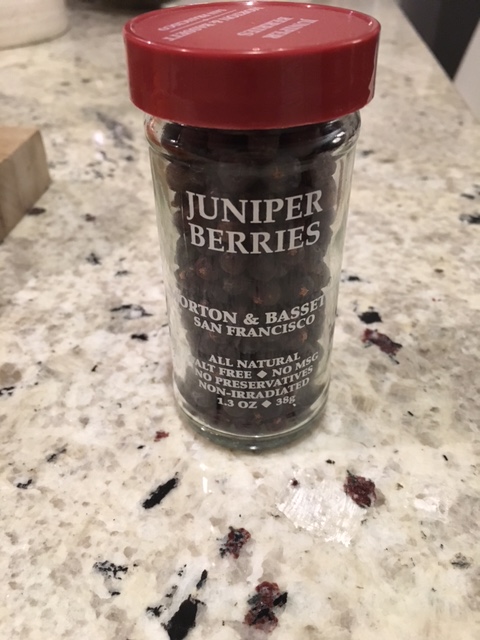
To celebrate Juniper Day of Frimaire, I made what Alton Brown names “the greatest meat and vinegar dish of all time.” Sauerbraten marinates for three days in a vinegar and juniper berry solution (and other spices as well). Juniper berries are not actually berries, but inverted pine cones. Juniper trees have an extremely slow growth rate and there are some in a juniper forest in Pakistan that are thought to be over 5,000 years old. Wired had an article about the 10 oldest living trees and included the Jardine Juniper in the Cache National Forest in Utah. The tree had been thought to be over 3,000 years old, but in the 1950’s, scientists took a core sample that downgraded the age to around 1,500 years.

Sauerbraten

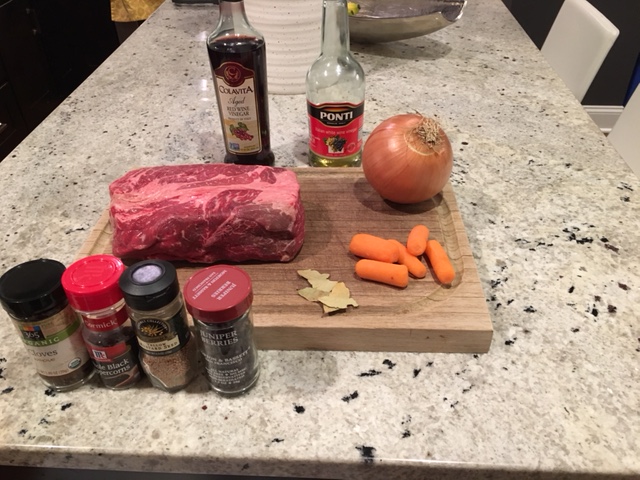
2 cups water

1 cup cider vinegar

1 cup red wine vinegar

1 onion, chopped

1 carrot, chopped

1 tbs and 1 tsp kosher salt

1/2 tsp black pepper

2 bay leaves

6 whole cloves

12 juniper berries

1 tsp mustard seeds

2 – 3 lbs bottom round

1 tbs vegetable oil

1/3 cup sugar

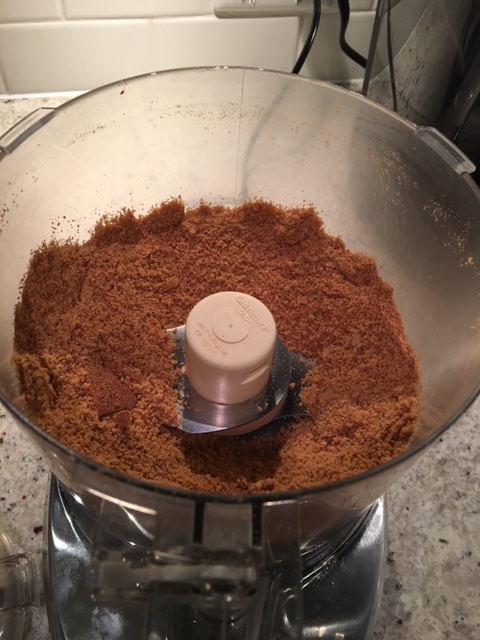
5 ounces dark old-fashioned ginger snaps, crushed

1/2 cup golden raisins

Add the water, vinegars, onion, carrot, salt, pepper, bay leaves, juniper berries, cloves and mustard seeds in a large pan and bring to a boil. Cover, lower the heat to a simmer and cook for 10 minutes. Let the mixture cool while you prepare the meat.

Rub the bottom round with oil and salt it on all sides. Heat a large pan over high heat and brown the meat on all sides. When the marinade is cool, add it and the meat to a container that can hold both comfortably. Refrigerate it for 3 days.

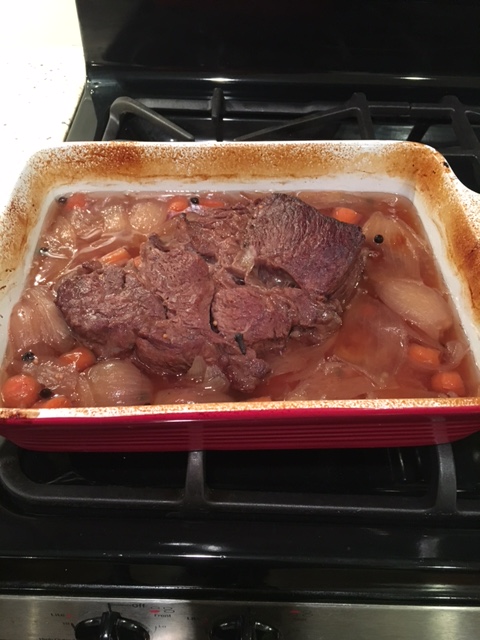
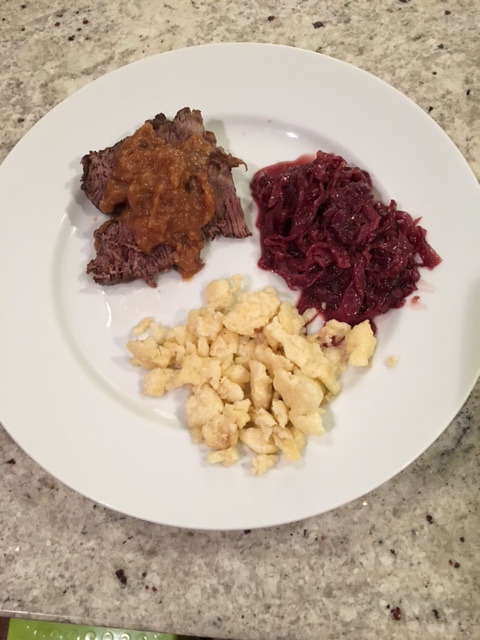
Heat the oven to 325 and add the sugar to the meat and marinade. Place in an oven proof dish, cover with foil and cook for 4 hours, until tender. When it’s finished cooking, remove the meat from the pan and strain the marinade liquid to remove the solids. Put the liquid in a sauce pan and place over medium-high heat. Add the crushed ginger snaps and cook until the sauce has thickened. Add the raisins. Slice the meat and serve with the sauce (and red cabbage and spaetzle).

img_1577img_1578img_1579img_1584img_1585img_1586


Honey Cake

You guys! Wonderful news! There was no bee rapture! Or, there may have been, but bees have managed to recover from it. This Slate article details the reasons why bees have rebounded from a historic low in population in 2008. In 2011, we joined a honey co-op run by a coworker on the roof of her apartment building in Uptown. She held a kick-off party at the start of summer to show everyone the hives, but on the day of the party, she went to check on the hive and almost all the bees were unexpectedly, unexplainably, dead. This was May 21, 2011, a rapture date predicted by that one crazy guy. It was a very eerie sight because the dead bees seemed to have died frozen in place. Rather than falling to the bottom of the hive, most of them were still hanging on to the frame. Bizzare. The honey co-op kickoff party turned into a fundraiser to purchase a new queen (which you can do on-line – they come in a small box inside a manilla envelope).

I celebrated Honey Day of Frost Month of the French Republican Calendar by making Smitten Kitchen‘s Honey Cake. It’s a perfect cake for morning coffee.

Honey Cake

3 1/2 cups flour

2 tsp baking powder

1/2 tsp salt

4 tsp cinnamon

1/2 tsp ground cloves

1/2 tsp ground allspice

1 cup vegetable oil

1 cup honey

1 1/2 cups sugar

1/2 cup brown sugar

3 large eggs

1 tsp vanilla extract

1 cup warm coffee or strong tea (I used earl grey)

3/4 cup fresh orange juice

I used a 10 cup bundt pan, but Smitten Kitchen’s recipe says that you can also use two 9-inch cake pans or a sheet pan. Heat oven to 350, spray your pan(s). Whisk the flour, baking powder, salt, cinnamon, cloves and allspice. Add the oil, honey, sugars, eggs, vanilla, tea and OJ. Mix together . Pour batter into baking pan and bake for 60 to 75 minutes for a bundt pan, less for cake and sheet pans.

img_1571img_1580