Salsify Fritters

Bonsoir and happy Black Salsify Day!

First, some housekeeping. I accidently posted Fig Day on Heliotrope day. Quelle horreur! A million apologies. Heliotrope appears to be used mostly in perfumes for its fragrance. Supposedly it is nicknamed “the cherry pie plant” because it smells like cherry pie. At any rate, I did not make any foods to celebrate Heliotrope Day, but I hope everyone wore something purple. Yesterday was Black Salsify Day and today is Chequer Tree Day. Wikipedia says that chequer trees produce a fruit that is similar to a date, but is rarely eaten these days. I celebrate the chequer tree, but am not cooking a dish using chequer tree fruit.

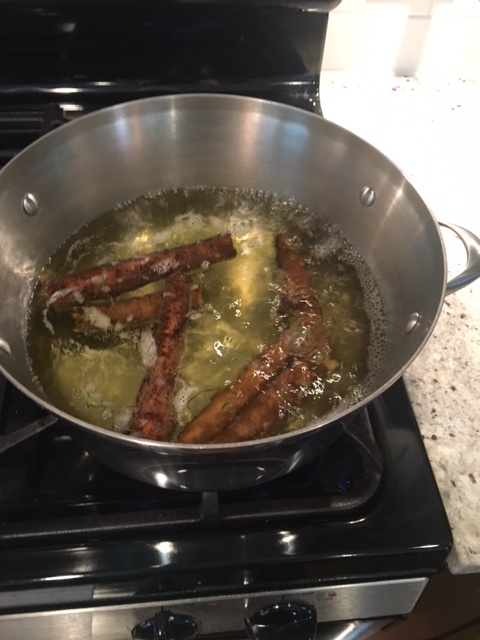
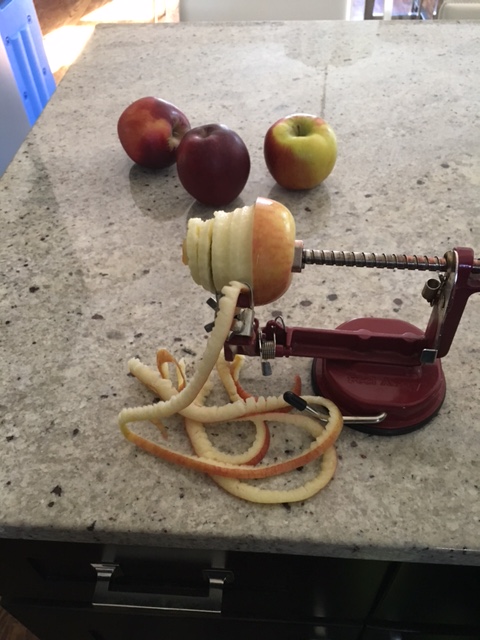
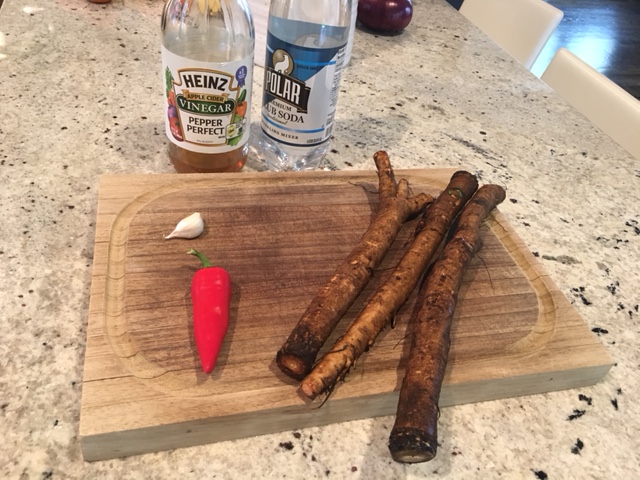
Black salsify is a root vegetable native to Europe. Wikipedia has it being cultivated in France from 1660 onward. At the grocery store(s), I found no black salsify, but I DID find a root that looked *exactly* like photos of black salsify online. This is a picture of burdock root and this is a picture of black salsify. Allegedly! It is burdock root and the internet says that grocery stores often misidentify it as black salsify. Whether or not that is the case here, I care not! I am using this root and cooking it with a recipe I found from Hugh Fearnely-Whittingstall for black salsify fritters.

Fried Black Salsify 

3 black salsify roots

1 cup of flour

1/2 tsp salt

1 egg yolk

1/2 cup sparkling water

1 red chili, diced

1 garlic clove, minced

2 tbs sugar

1/2 cup apple cider vinegar

2 tbs water

oil for frying

Heat a pot of water to boiling.

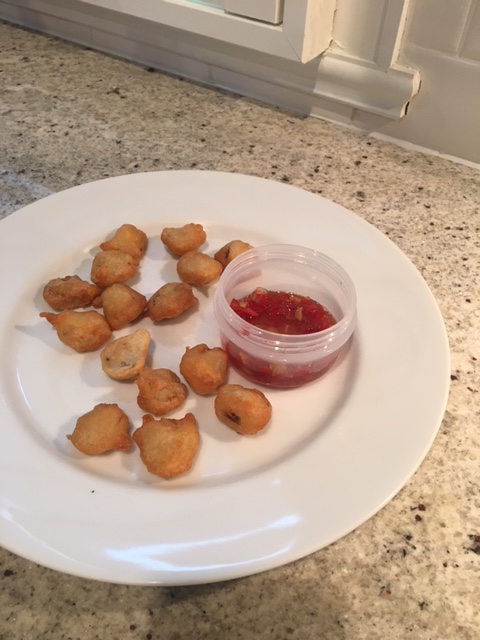
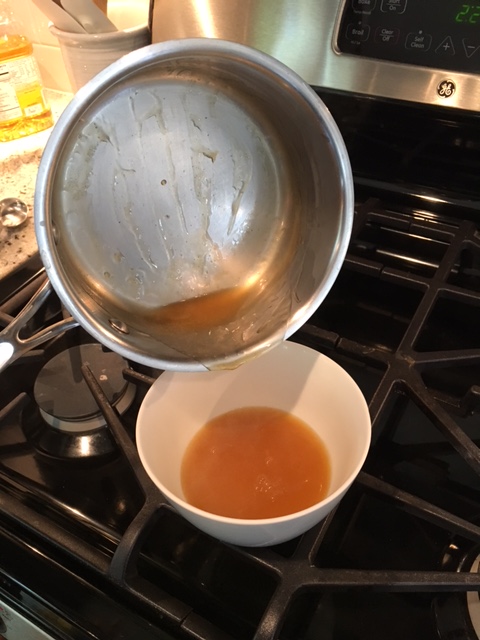
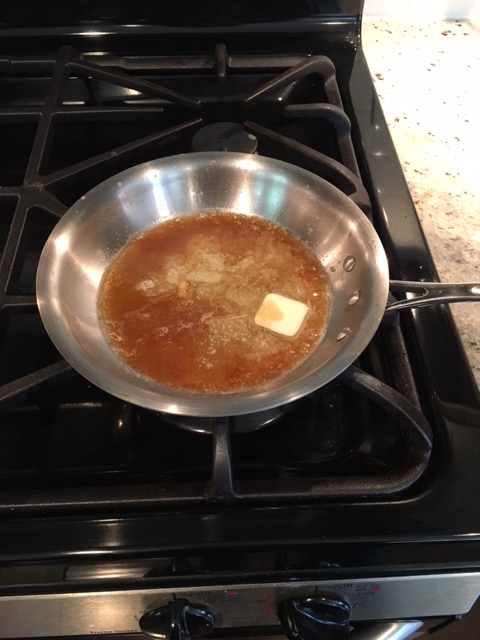
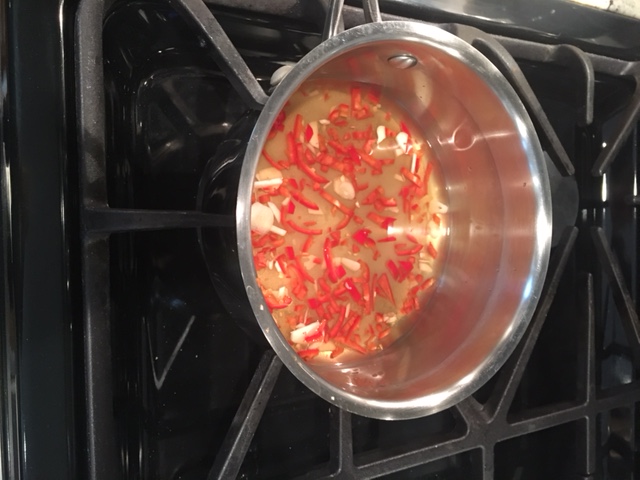
The dipping sauce here is a homemade sweet chili sauce and it is DELICIOUS. For the sauce, put the chili, garlic, vinegar, sugar and water in a small saucepan and heat until the sugar dissolves. Simmer until syrupy and reserve.

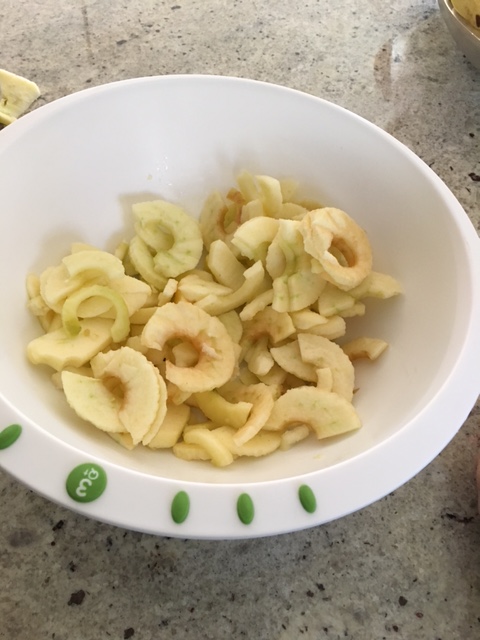
Boil the salsify roots for 5 minutes. Place in an ice bath. Once cool, peel off the skin and cut into coins. Whisk together the flour, salt, egg yolk and sparkling water. Heat a pan of oil for frying to 350 degrees. Dip the salsify coins in the batter and fry until golden brown. Remove to a plate lined with paper towels. Serve with the sweet chili sauce. Enjoy!
img_1477-copyimg_1478-copyimg_1479img_1480


Fig Ice Cream

Happy Fig Day!

Figs are an ancient domesticated fruit – the cultivation of figs possibly predates that of wheat and barley. I had vaguely remembered a fairly gross factoid about figs that seems to pan out – figs are pollinated via wasps that enter fig fruits and lay eggs. In the process of doing so, some female wasps end up stuck inside of fig fruits and die. The fig fruit has an enzyme that turns most of the wasp into protein. So, when we eat certain types of figs, we’re also eating dead wasp exoskeletons. Allegedly, figs raised in California are self-pollinating and don’t require wasps and are therefore *supposedly* wasp-free. Cursory internet research didn’t produce an explanation for how figs could self pollinate.

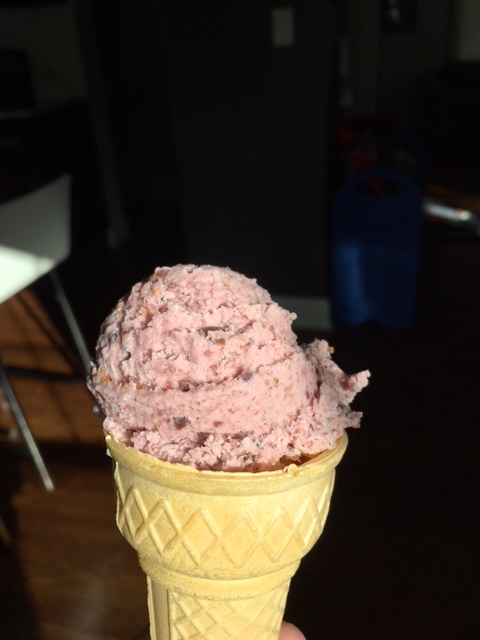
To celebrate figs today, I turn to David Lebovitz‘s wonderful The Perfect Scoop. He has a very simple fig ice cream recipe that is sure to delight.

Fig Ice Cream 

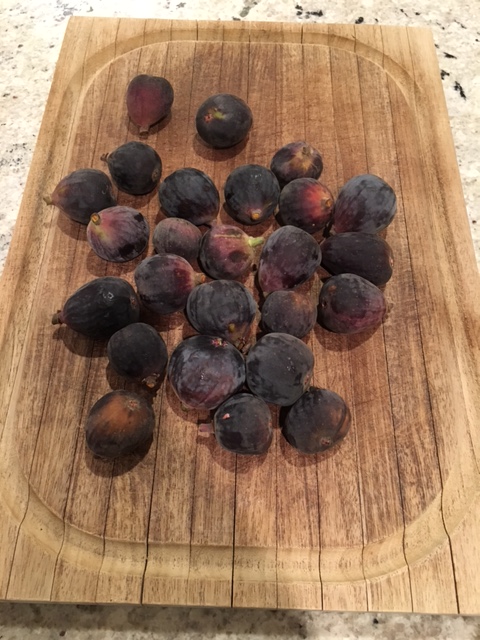
20 ripe fresh figs

1/2 cup water

1 lemon

3/4 cup sugar

1 cup heavy cream

1/2 tsp fresh squeezed lemon juice

dash of salt

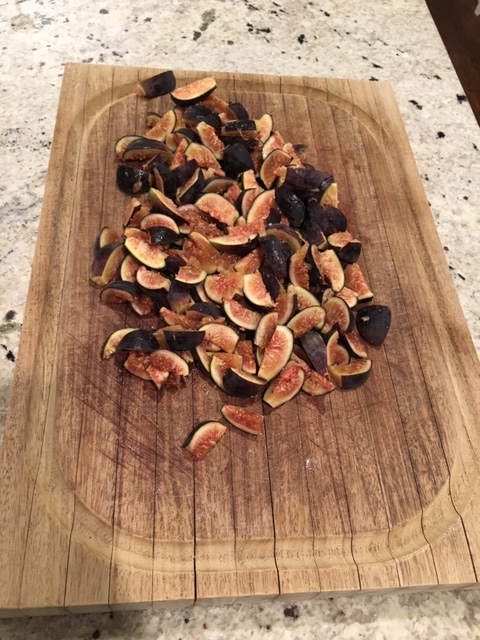
Cut off the hard stems of the figs and then slice each fig into 8 pieces. Place the figs, water and lemon zest in a medium pan and cook over medium heat, covered. Continue to cook for 8 to 10 minutes.

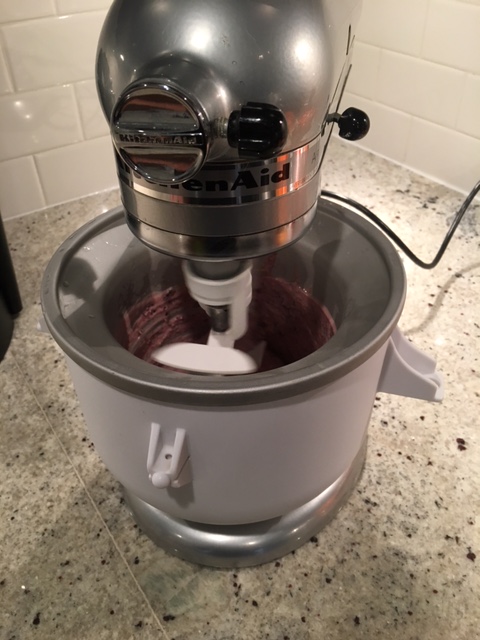
Add the sugar and remove the lid. Continue to cook until the figs and fig syrup become syrupy. Remove from heat and let cool. Once cooled, puree in a food processor. Add the cream, lemon juice and salt and continue to puree. Chill overnight and then process in an ice cream maker. Enjoy!

img_1451img_1452img_1454img_1469


Christmas Goose

Happy 5 Brumaire! Alternately known as Foggy Goose day!

In the spirit of reason and Brumaire, I have found a goose and cooked it. I decided to take a page from Hugh Fearnley-Whittingstall‘s River Cottage Year and make a stab at his Christmas goose recipe. In an update to follow, I’ll describe the duck legs confit that I’ve got going in the fridge. Today, rather than roast the goose breast simply, as he describes in River Cottage Year, I went with a recipe for goose breast from his massive MEAT tome – The River Cottage Meat Book. His christmas goose recipe follows three main steps: first, making a sausage out of the neck, second, confit of the legs, and third, roasting the breast. This recipe for the breast was very simple and could easily translate to chicken thighs.

Goose or Duck Breasts with Pineapple, Chile and Soy

1 boneless goose breast

1/2 large pineapple

3 tbs soy sauce

1 tsp honey

3 garlic cloves, chopped

2 inch piece of ginger, sliced

1 fresh red pepper

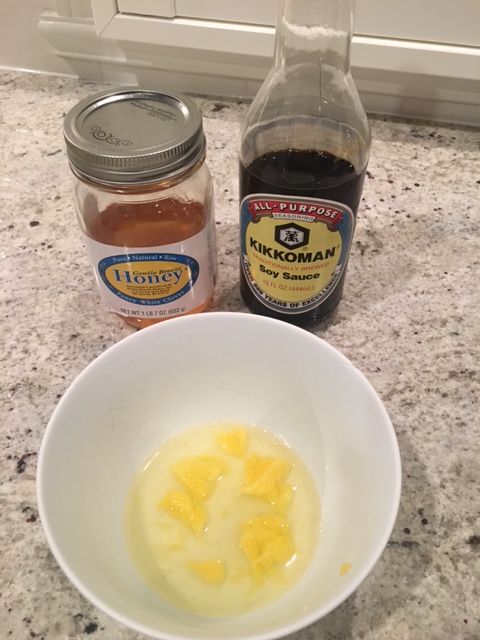
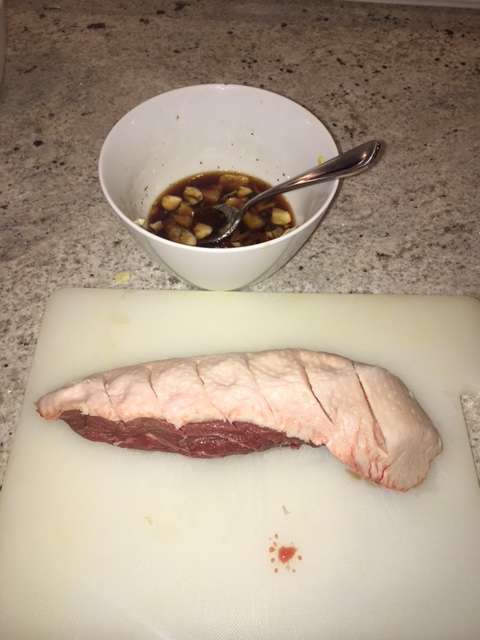
Heat the oven to 425. Peel and core the pineapple and reserve two slices. Juice the rest of the 1/2 pineapple and use the juice in the marinade. For the marinade, add the pineapple juice, soy sauce, honey, garlic, ginger, red pepper and black pepper. Make 6 or 7 slashes in the skin of the breast and place in the marinade.

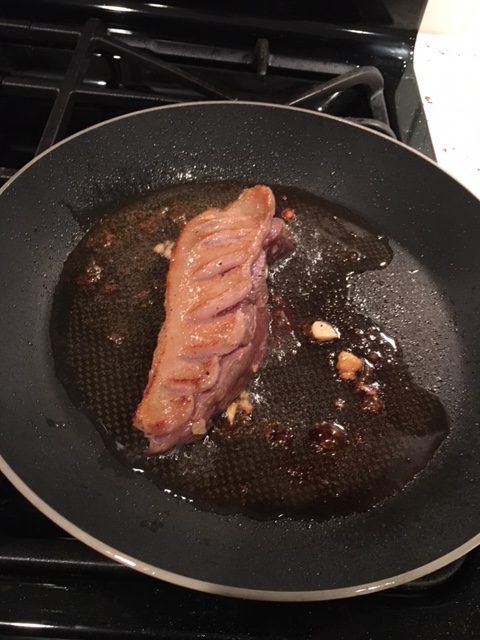
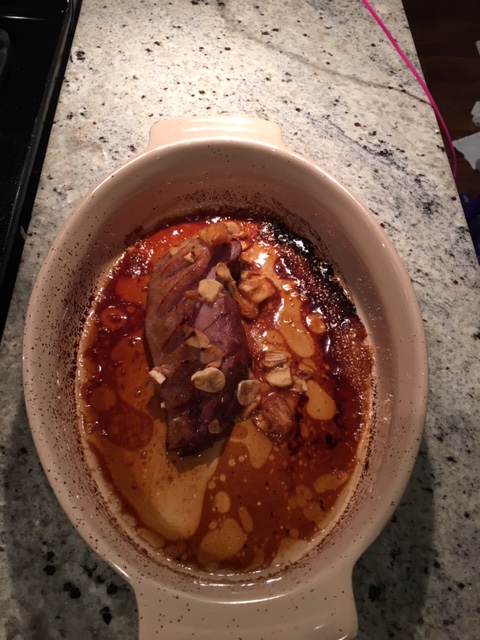
Once sufficently marinated (Hugh suggests a couple of hours, but 10 minutes would suffice), Heat a pan to very hot and add a small amount of oil. Sear both sides of the breast until the skin begins to crisp. Place the breast in an ovenproof dish and pour the marinade over the breast. Cook in the oven for 12 to 14 minutes. Remove the breast from the dish and let rest while cooking the pineapple.

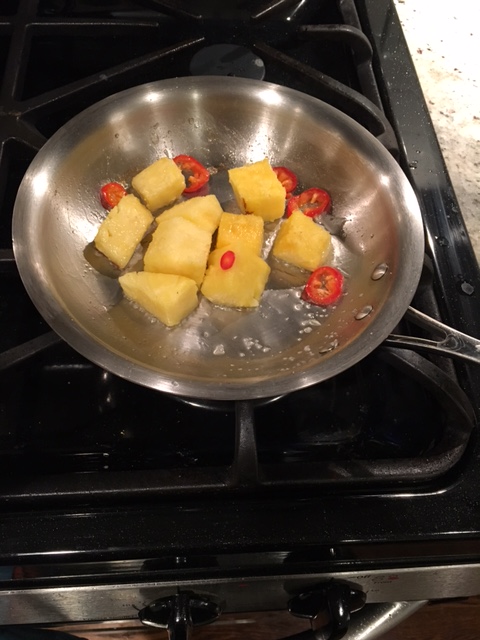
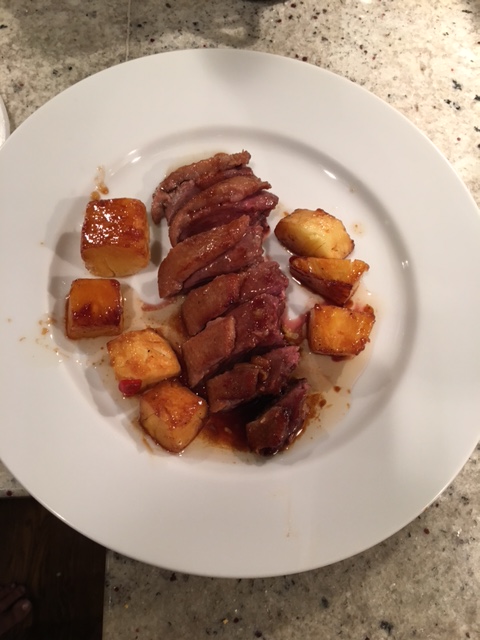
Chop the reserved two slices of pineapple into chunks and cook in a lightly oiled pan. Sprinkle a little sugar over them to caramelize. Pour the juices from the cooked breast dish into the pineapple pan and reduce until syrupy. Place the meat in the pan and coat with the syrup. Slice the breast and enjoy!

img_1457img_1458img_1461img_1463img_1464img_1465


Pickled Beets

Happy Beet Day of Foggy Month!

Obviously, there are many ways you could celebrate today – borscht, salads, roasted, juiced, etc. I’ve chosen to pickle them with the added benefit of using the pickling juice to make beet-pickled eggs. I haven’t yet made the eggs, but will update when completed! I turned again to Amy Thielen’s The New Midwestern Table for this recipe.

Pickled Beets

1 1/2 lb beets (Thielen suggests baby beets)

1 tsp salt (Thielen suggests pickling salt, but I did not have any)

1 1/4 cups apple cider vinegar

2/3 cup sugar

1 tsp cumin seeds

2 whole cloves

6 green cardamom pods, cracked

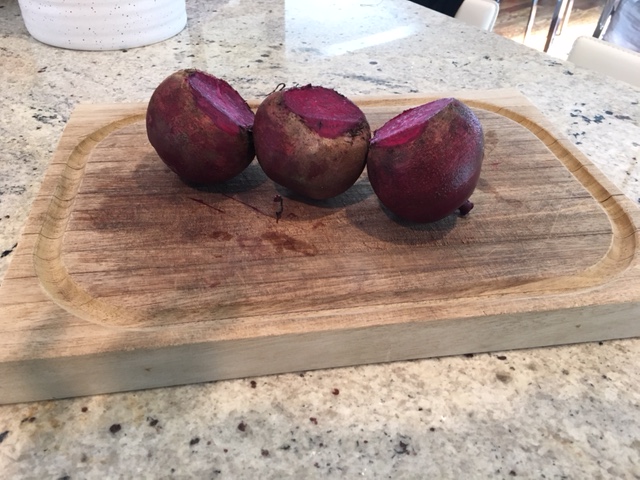
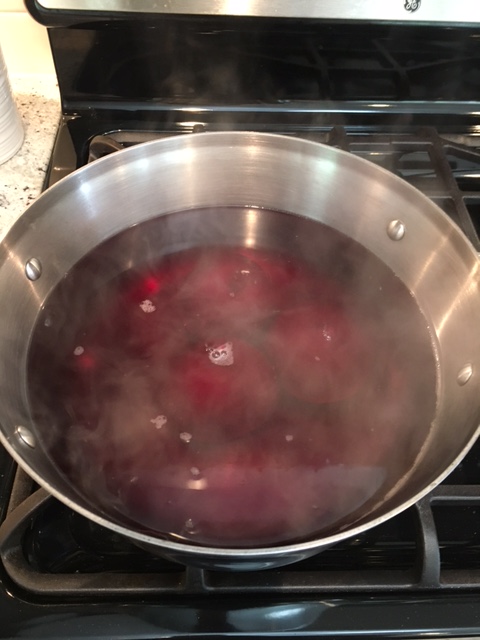
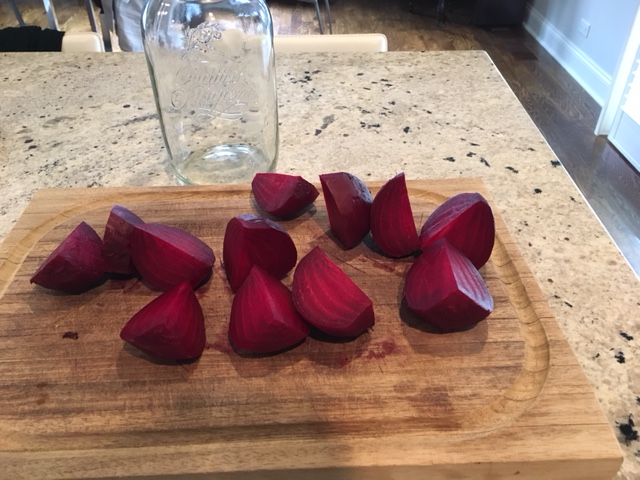
Wash the beets and place in a large pan, cover them with water. Add salt and bring to a boil. Reduce to simmer and cook, partially covered for 15 to 30 minutes, or until beets are tender. Remove the beets from heat and drain. When cooled, peel off the skin of the beets and chop them into quarters.

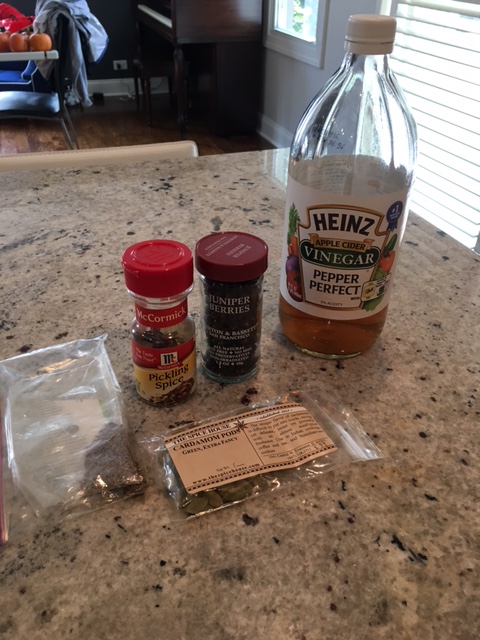
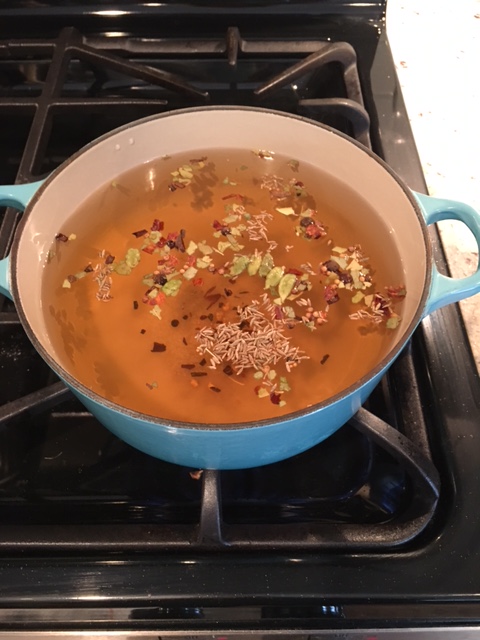
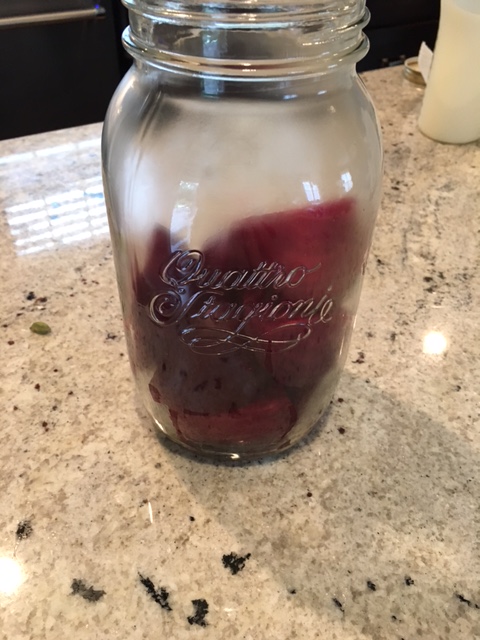
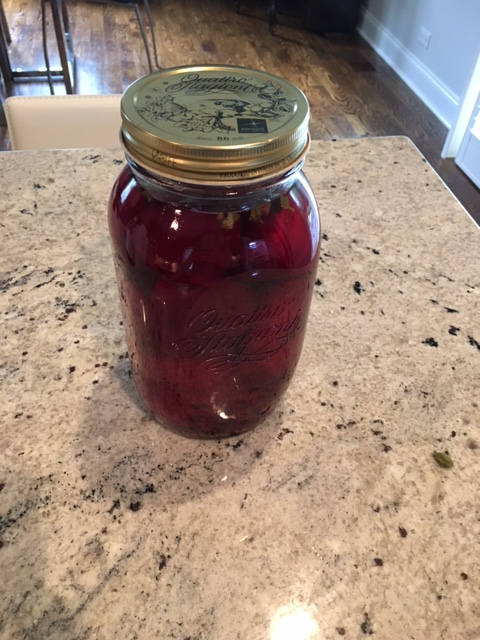
In another pan, combine 3 cups of water, the salt, vinegar, sugar, cumin seeds, cloves and cardamom. Simmer until the sugar dissolves and then let it cool. Put the beets into a mason jar and cover with the pickling liquid. Refrigerate and enjoy!

img_1392img_1393img_1394img_1395img_1396img_1397img_1398

Pear and Honey Cake

Joyeux jour de poire!

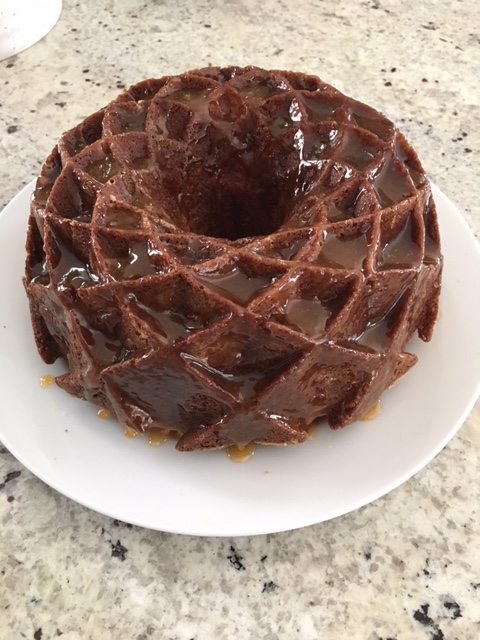
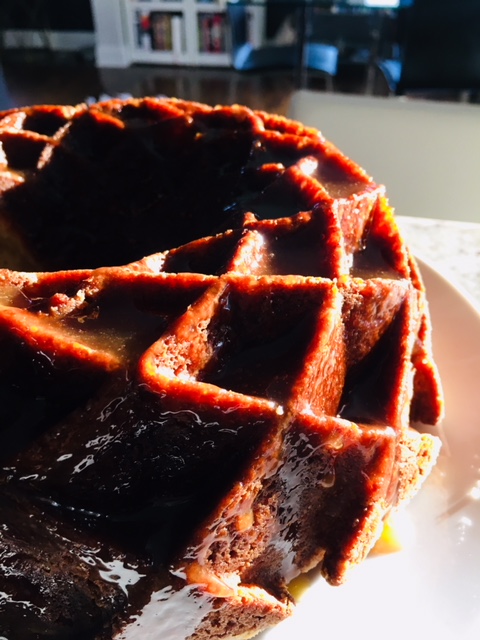
Pear day! I’ve chosen a recipe from the very lovely New Midwestern Table by Amy Thielen. I love this cookbook and have enjoyed every recipe I’ve made from it. Her photograph for this cake had used a very elaborate bundt pan which she mentions is from Nordic Ware. They’re amazing.

Pear and Honey Cake 

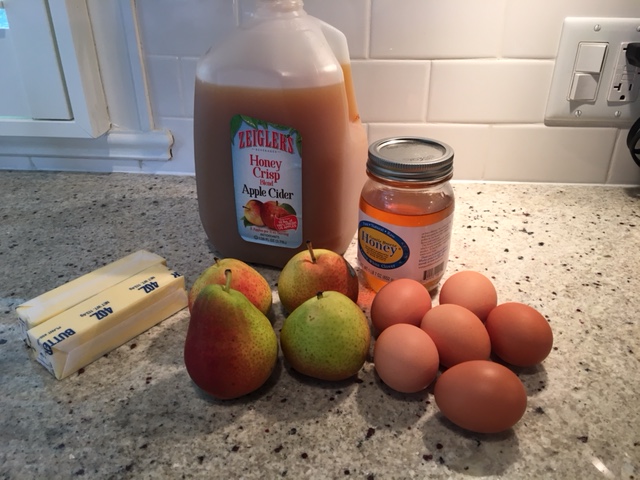
4 pears

2 sticks plus 2 tbs of butter (at room temperature)

1/4 cup plus 2 tbs honey

2 tbs apple cider (or Kirsh or rum)

2 3/4 cups flour

1 tsp baking powder

1/4 tsp salt

2 1/3 cups sugar

6 large eggs

1 1/2 tsp vanilla extract

2 tbs fresh lemon juice

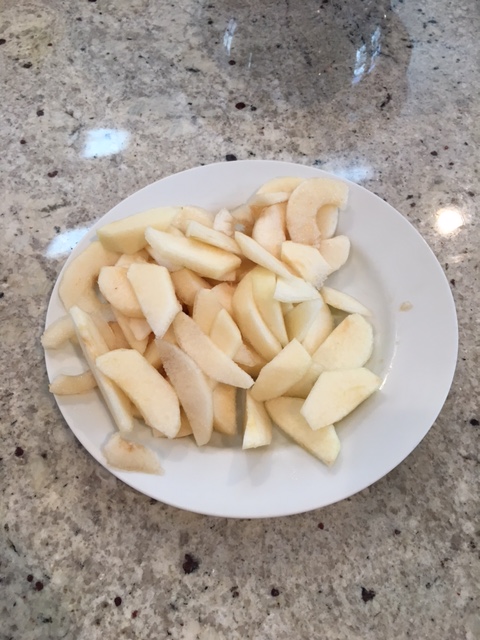
First, peel, slice and core the pears. In a pan, heat 2 tablespoons of butter. Add the pears and cook for about 3 minutes. Remove from heat and then add 2 tablespoons of honey and the apple cider/Kirsch/rum. Cook for one more minute. Set a colander over a bowl and pour the pears into the colander. Leave the pear juice in the bowl and reserve the pears.

Heat the oven to 400.

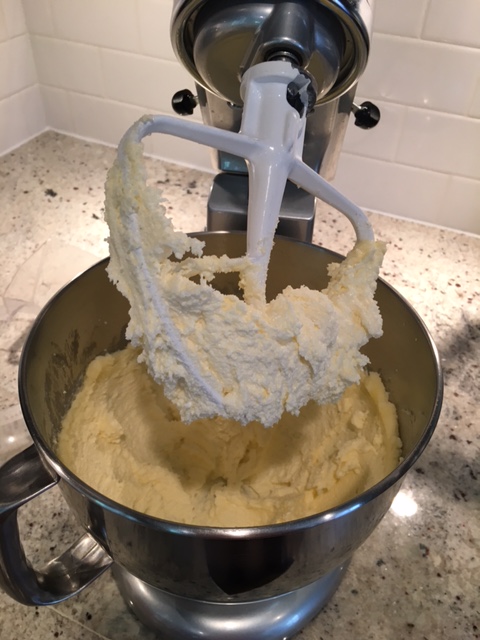
Mix the 2 sticks of butter in an electric blender until whipped. Add 2 cups of sugar and keep mixing for 5 minutes until very light. Add eggs slowly and once all combined, add the vanilla and 1/4 cup of honey. In a separate bowl, whisk together the flour, baking powder and salt. Slowly add the flour mixture to the butter mixture. Fold in the pears.

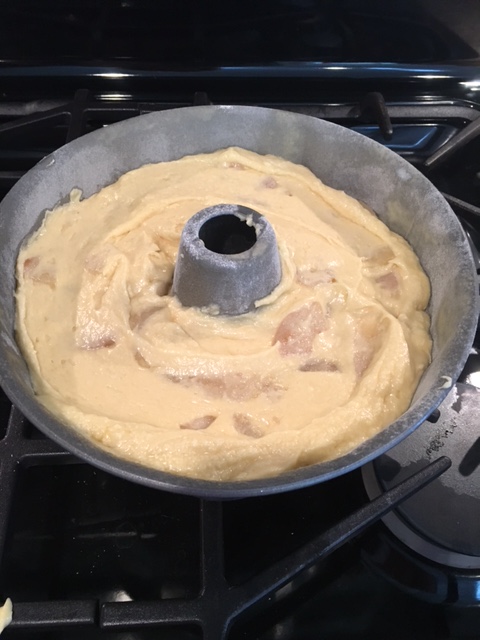
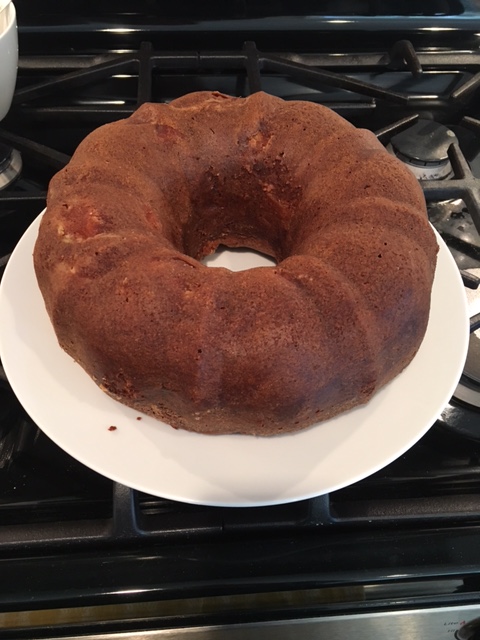
Prepare the bundt pan by buttering and flowering it generously. Pour the batter into the prepared pan. Bake at 400 for 10 minutes and then reduce the temperature to 325 and bake for 50 to 60 minutes. Let the cake cook and then invert onto a serving plate.

Make the glaze by simmering the reserved pear juice and adding 1/3 cup sugar and lemon juice. Simmer until thickened and then brush onto the cake. Enjoy!
img_1429img_1430img_1431img_1432img_1433img_1437

Update! I now have a Nordic Ware pan and have made this recipe using apples instead of pears. Behold:

apple cake.2apple cake

Potato Salad

Happy celery day!

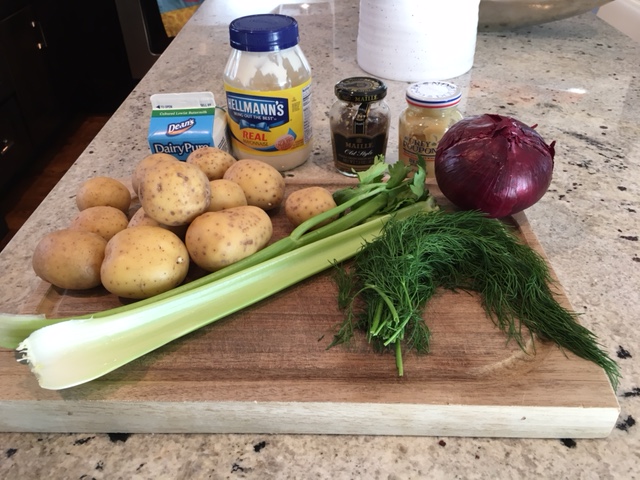
Today’s celebration of celery comes via the very best recipe I know for potato salad. The celery shines, thanks to Ina Garten. Briefly, an article in the July, 1886 edition of The American Naturalist, entitled, “The History of Celery” puts celery as mainly a medicinal plant at the time of the French Revolution. It was known to improve the health of sailors who suffered from scurvy.

I saw a note that the lovely French Republican Calendar is 15% off from now through 3 Brumiaire (October 24, 2016). Code word: FOGGY.

Potato Salad 

3 lbs Yukon gold potatoes

1 cup mayonnaise

1/4 cup buttermilk

2 tbs Dijon mustard

2 tbs whole grain mustard

1/2 cup fresh dill

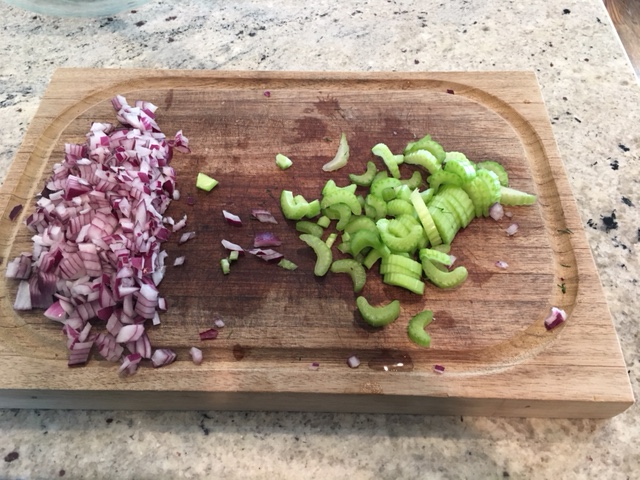
1/2 cup chopped celery

1/2 cup chopped red onion

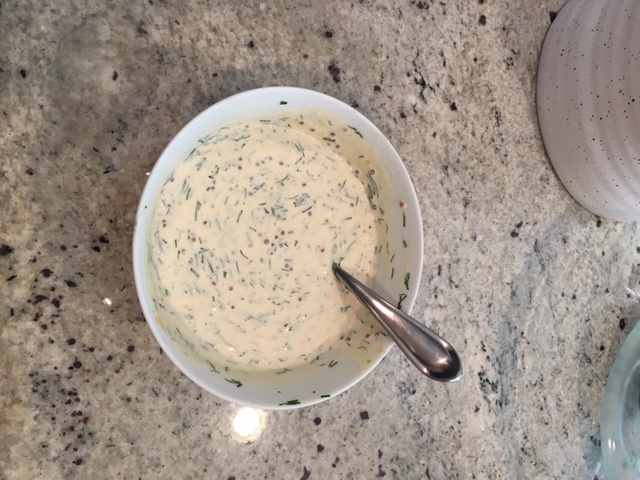
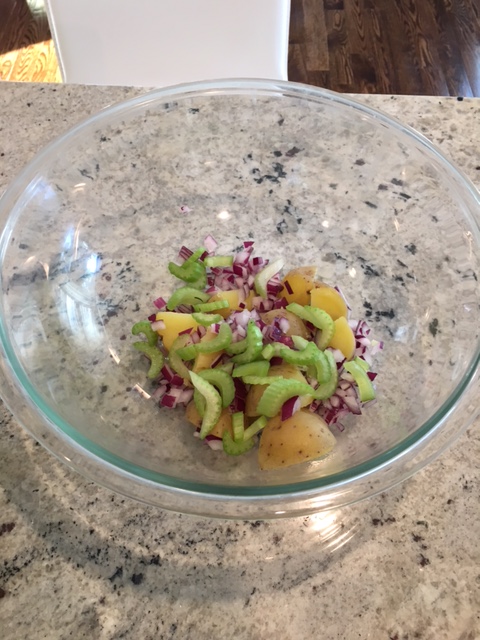
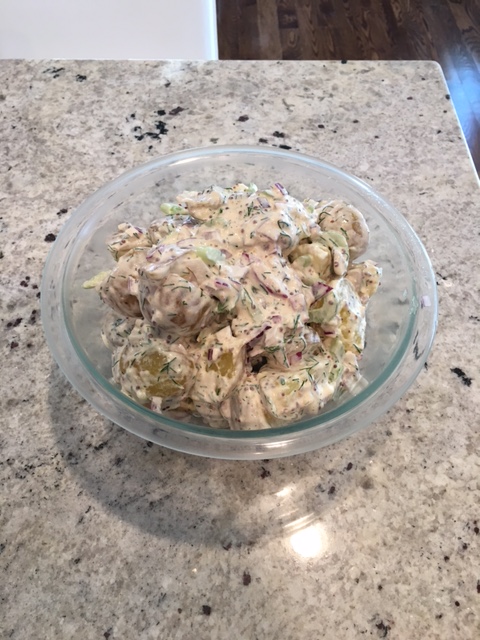
Boil the potatoes in salted water until just tender. Drain in a colander and put the potatoes back in the dry pan. Place a clean kitchen towel over the pot and let steam for 15 minutes. Meanwhile, chop the celery, red onion and dill. In a small bowl, mix the mayo, buttermilk, mustards and dill. Add salt and pepper to taste. Once the potatoes have cooled, but are still warm, slice them into halves and place in a large bowl with the celery and red onion. Add the buttermilk mixture and mix. Salt and pepper to taste. Cool in the fridge. Enjoy!
img_1415img_1416img_1417img_1418img_1419


Apple Pie

Happy apple day!

Even more exciting, happy first day of Brumiaire! We now enter Foggy month. The internet tells me that brume is a poetic name for a heavy, atmospheric mist that is common in Provence during this time of year.

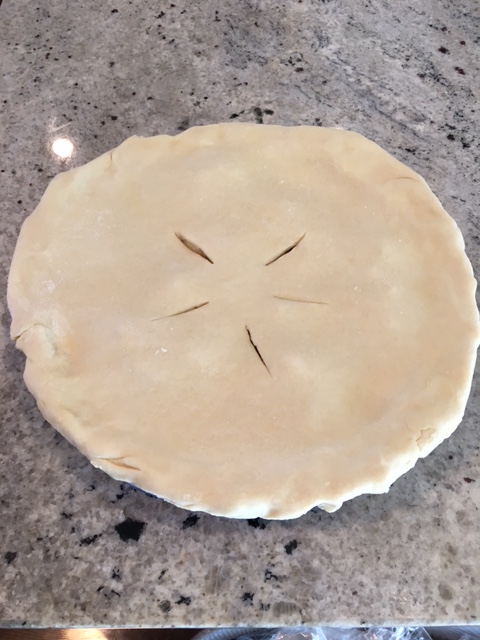
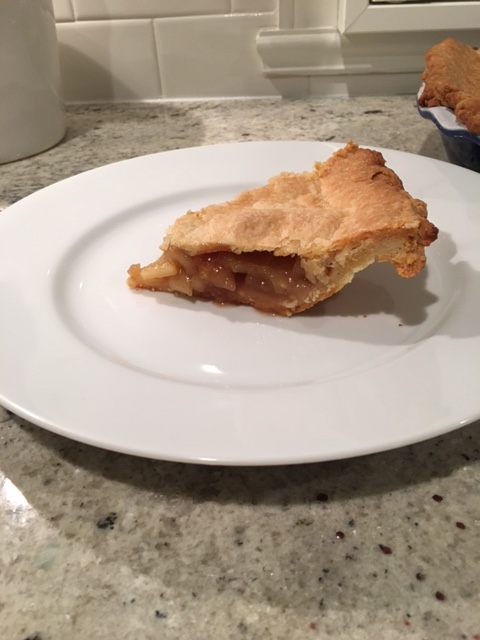
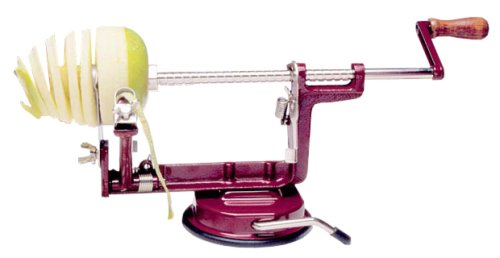
With apple day, there was only one decision to make: which apple pie recipe should I choose? I went with Rose Levy Beranbaum‘s Lucious Apple Pie. Rose is, clearly, a baking genius, but it really comes to the fore in this particular recipe. She has solved the eternal conundrum of goopy apple pies. By draining the apple slices and reducing the liquid, you end up with a perfectly caramel-y and not at all soggy pie. But, best of all, Apple day of Foggy month let me use my favorite kitchen implement – the apple/peeler/corer/slicer.

Apple Pie 

Double crust recipe for a 9 inch deep dish pie plate

6 apples, pealed, cored and sliced

1 tbs of fresh squeezed lemon juice

1/4 cup of dark brown sugar

1/4 cup granulated sugar

1/2 tsp ground cinnamon

1/4 tsp nutmeg

1/4 tsp salt

1/2 cup apple cider

1/2 tbs cornstarch (for cider mixture)

2 tbs unsalted butter

1 tbs and 1 tsp of cornstarch (for sliced apples)

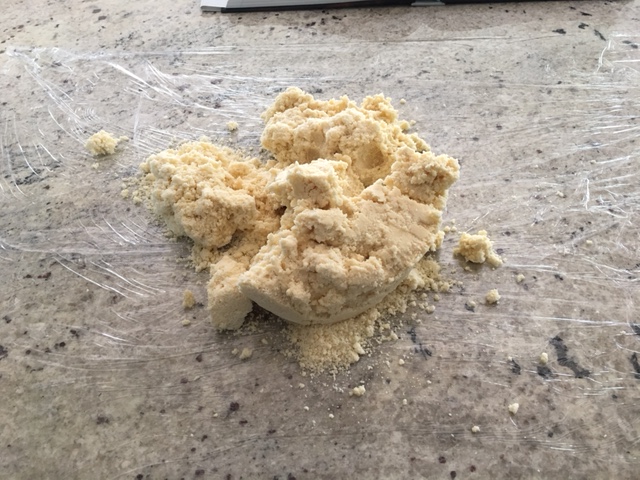
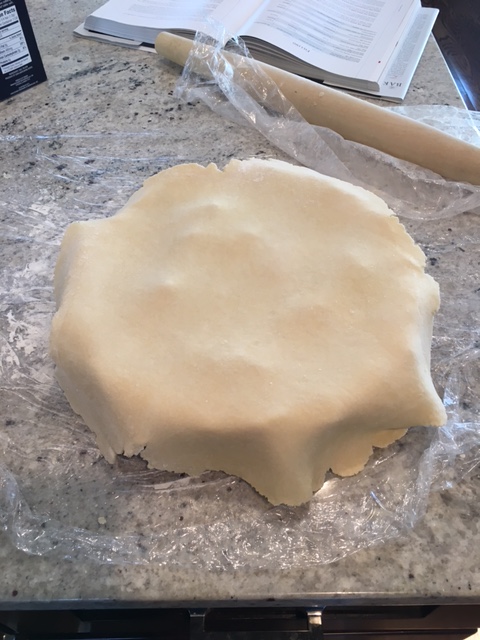
First, make the dough. I have used Rose’s dough recipe, but feel free to use whatever works best and is easiest. While the dough is chilling, start on the apples. Peel, slice and core them and place them in a large bowl. Toss the slices with the lemon juice and then add the brown sugar, granulated sugar, cinnamon, nutmeg and salt. Let the apples sit in the mixture at room temperature for at least 30 minutes.

In a pan, mix the apple cider and 1/2 tablespoon of cornstarch. Let it come to a boil and cook for a few minutes until it gets very thick. Remove from leat and let it cool.

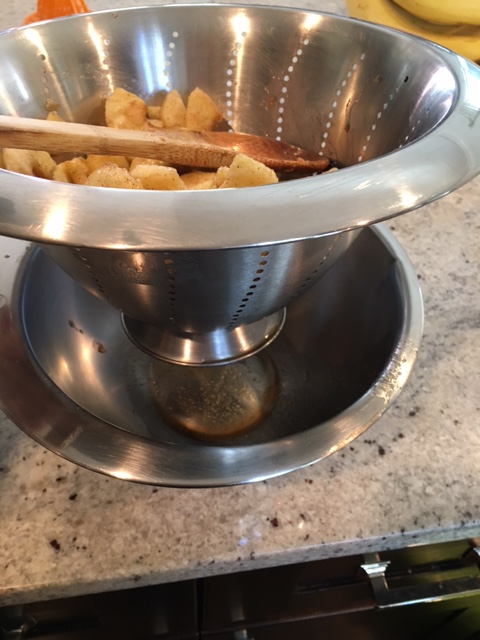
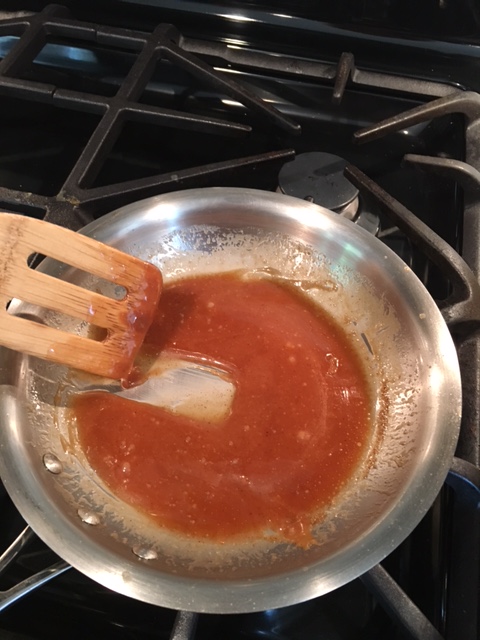
Put a colander into a large bowl and pour the apple slices and their juices into the colander. Pour all the liquid into a small pan and add the butter. Cook at a simmer until the mixture is thick and caramel-y.

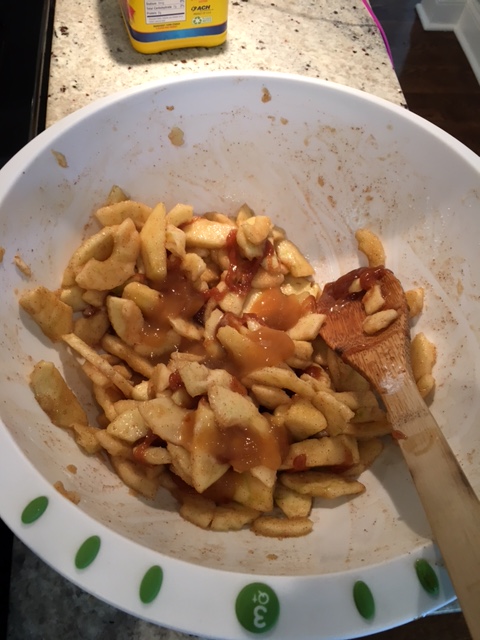
Set the oven to 425. Toss the apples with the 1 tablespoon plus 1 teaspoon of cornstarch. Add the reduced syrup to the apples and then the thickened apple cider. Pour the apples into the pie plate that has been lined with dough. Roll out the dough for the top crust. I went with a full top crust, but lattice would also work for apple pie. If you use a full top crust, cut some vent holes in it. Rose suggests wrapping the pie in plastic at this point and letting it chill in the fridge for an hour. I skipped this step and put it in the oven.

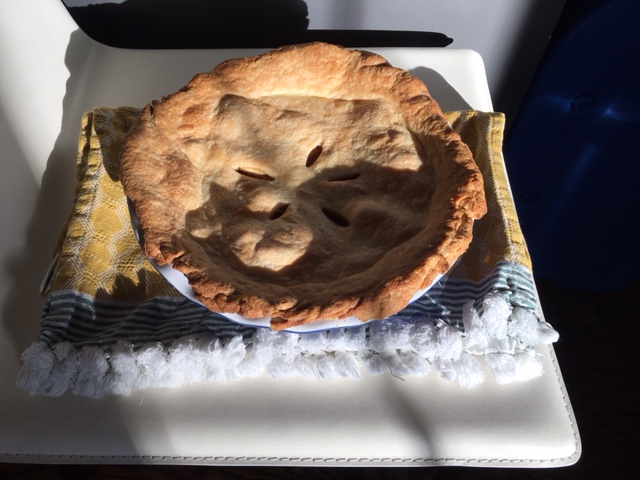
Bake at 425 for 20 minutes. Rose’s recipe says to continue at 425 for another 25 to 35 minutes, and I’m 90% sure this would be fine. However, most other pie recipes reduce the heat after the initial cooking to 350. So, I did that here. I still ended up with a golden brown crust and a bubbling interior. Cool before cutting and pop open the ice cream! Enjoy!!!

img_1404img_1406img_1407img_1408img_1409img_1410img_1411img_1412img_1413img_1414img_1422img_1427


Barley Water

Happy Barley Day!

This recipe can easily be a two-fer. You don’t end up using the barley grains in the barley water, so they can be utilized in salads, or porridge. I was inspired to make this from a recipe in Alton Brown’s newest cookbook, EveryDayCook. I could imagine adding some sliced ginger and a cinnamon stick as well!

Barely Water

8 cups of water

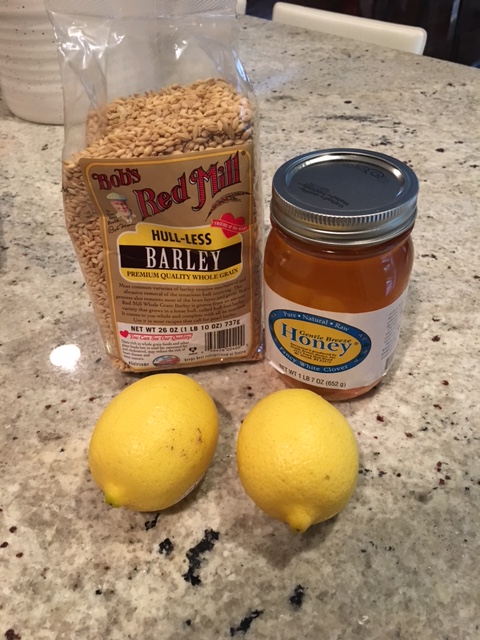
1 cup of hulled barley

2 lemons

1/4 cup honey

dash of salt

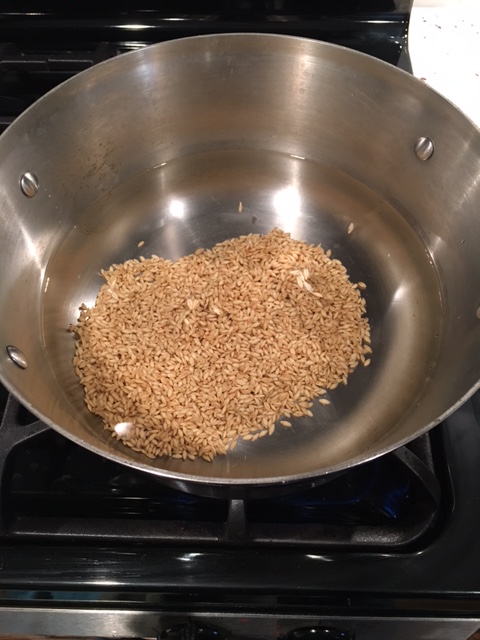
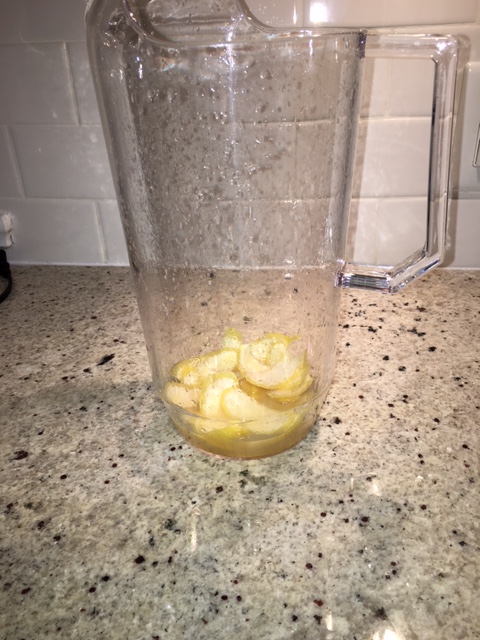
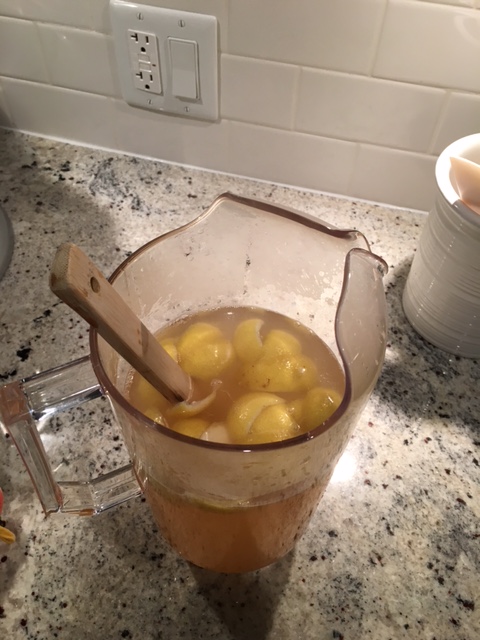
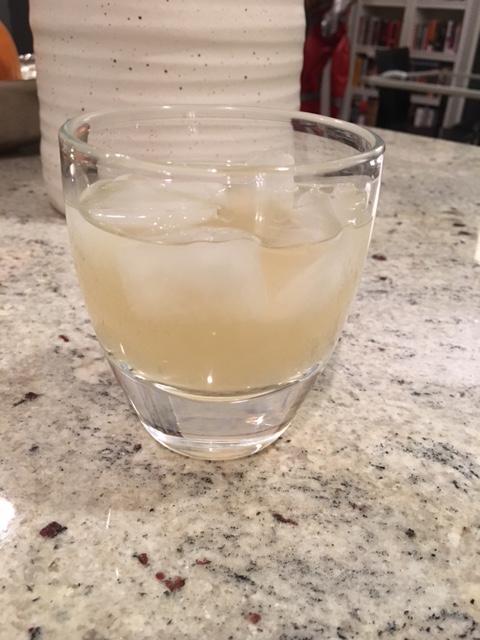
Bring the water and barley to a boil and then lower the heat and simmer for 30 minutes. Peel two lemons and put the peels in a pitcher. Juice the lemons and add the juice to the pitcher. Add the honey to the pitcher as well. Drain the boiled barley through a sieve to eliminate the barley from the liquid. Add the liquid to the pitcher with the lemon and honey and then let cool. Enjoy!
img_1371img_1372img_1373img_1380img_1391

Sunday Sauce with Meatballs

Mes amis!

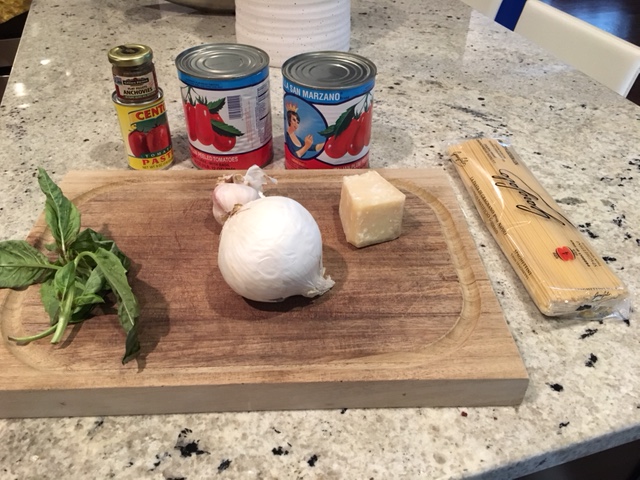
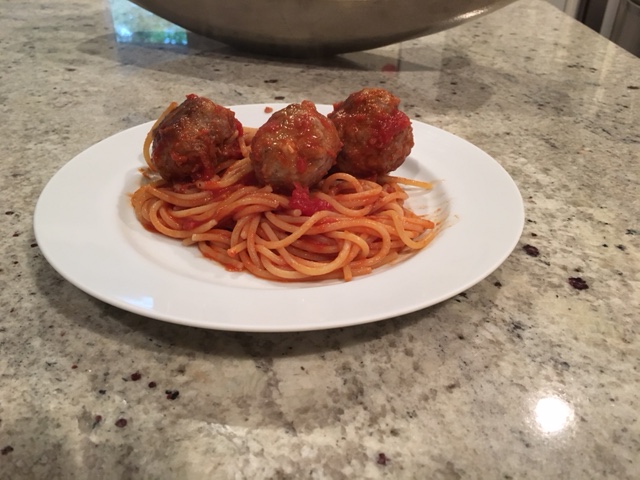
We are celebrating tomato day of Grape Harvest month and I can share with you one of my most honed recipes. To truly celebrate the tomato in its season, I think the best choice would be a BLT. But, you don’t need a recipe for that! Instead, I present to you the best recipe for spaghetti and meatballs. It’s the sunday sauce of your dreams! Adapted from Tony Danza’s (yes, he has his own cookbook) recipe, I’ve made several changes over the years. It takes some time to make. What always works best for me is to make the meatballs the day before I plan on serving the spaghetti. Then, day-of, make the sauce and simmer the meatballs in the sauce for an hour or two. Tony uses a ton of garlic – embrace it! He also juices his canned tomatoes, but I opt not to do this. I prefer a chunkier sauce. To get a softer texture in the interior of the meatball, I have switched to heavy cream. Tony suggests using any combination of ground sirloin, ground pork and adds pork ribs as well. I typically use only ground sirloin and omit the ribs. I have done it both ways and they are both delicious. I always feel like Clemenza when I pour the tomatoes into the pan.

Sunday Sauce with Meatballs 

2 cans (28 oz each) of peeled San Marzano (D.O.P., when possible) tomatoes in basil

1 can tomato paste (6 oz)

1/4 cup olive oil

13 garlic cloves, divided

1 medium onion, chopped

3 anchovy fillets in oil

salt and pepper

1/4 tsp red pepper flakes

1/2 cup red wine

1 cup grated Parmesan cheese, divided

1 cup water

1/2 cup fresh basil leaves

1 lb ground sirloin

2 eggs

1/2 cup seasoned bread crumbs

3/4 cup heavy cream

1 cup flour

1 container of spaghetti


Meatballs 

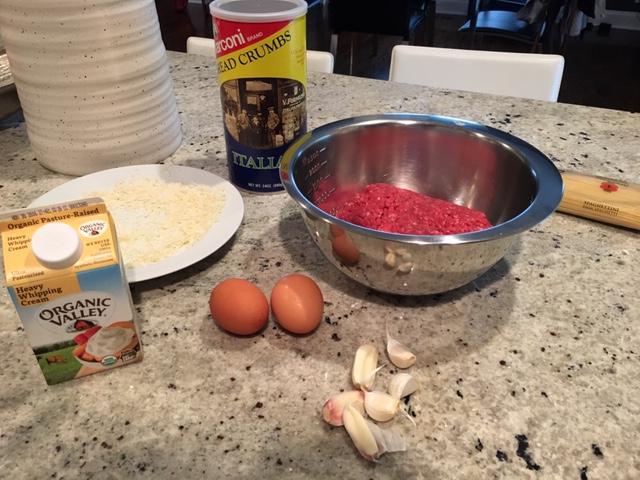
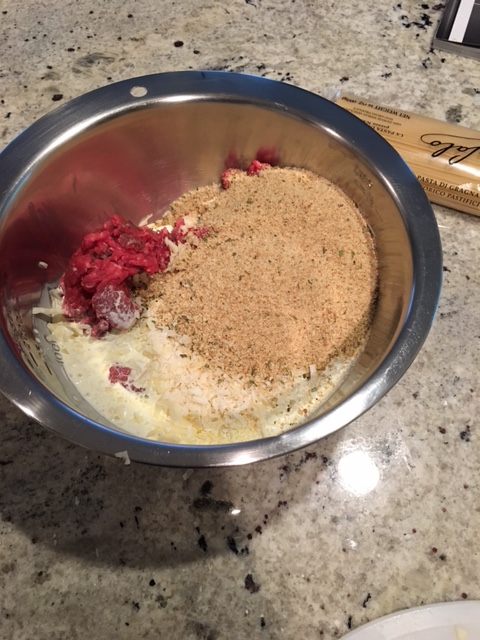
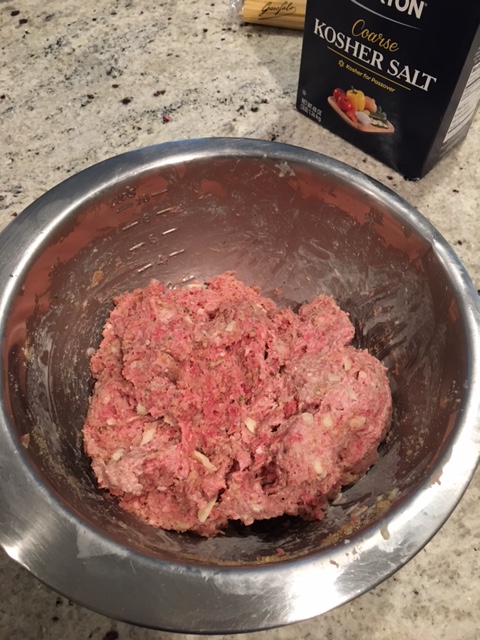
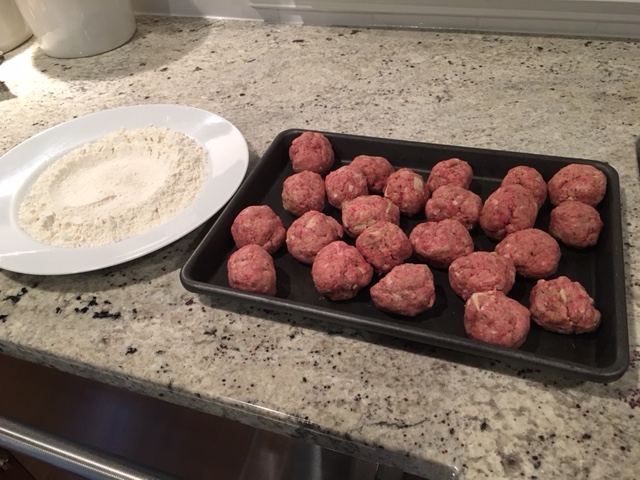
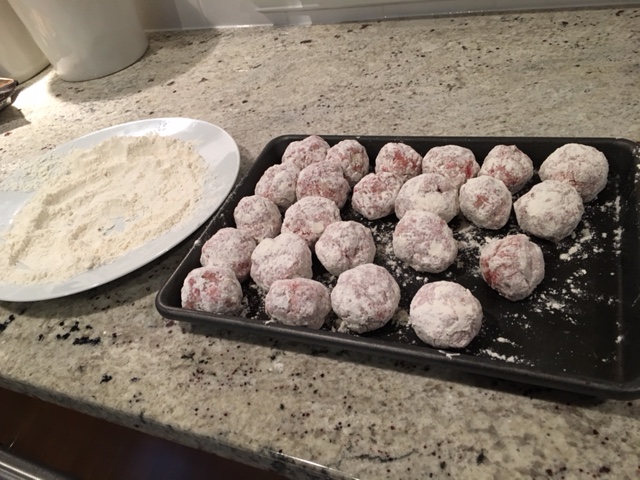
In a medium bowl, put the ground meat, eggs, 6 cloves of chopped garlic, bread crumbs, 1 teaspoon salt, 1/4 teaspoon pepper, 1/2 cup grated parmesan cheese and heavy cream. Mix it all together lightly with your hands. Working on the counter next to your sink, start rolling the meatballs in about two tablespoon sized balls. Whenever your hands get sticky, just run them under some cool water. Pour a cup of flour on to a large plate and begin rolling each meatball in the flour to get a thin dusting.

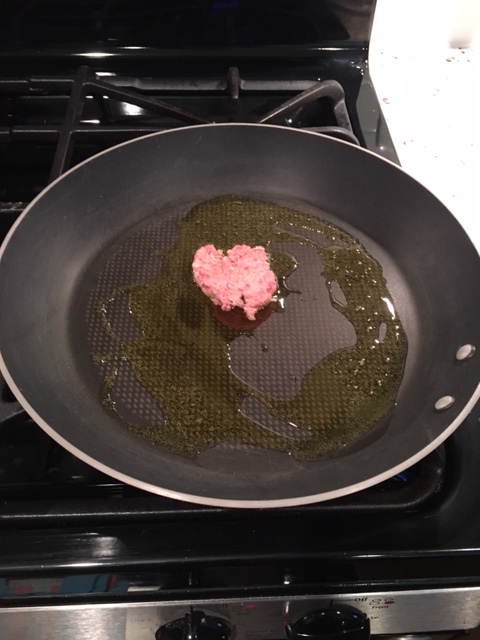
Most important step: pinch off a small piece of the meat mixture and fry it up to check the taste. I usually end up adding more salt at this point.

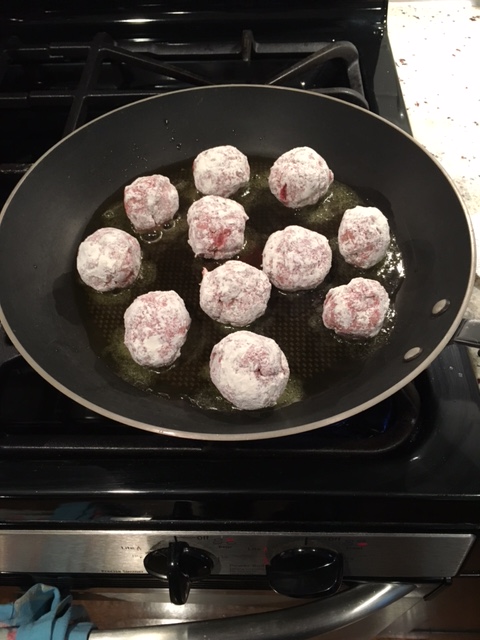
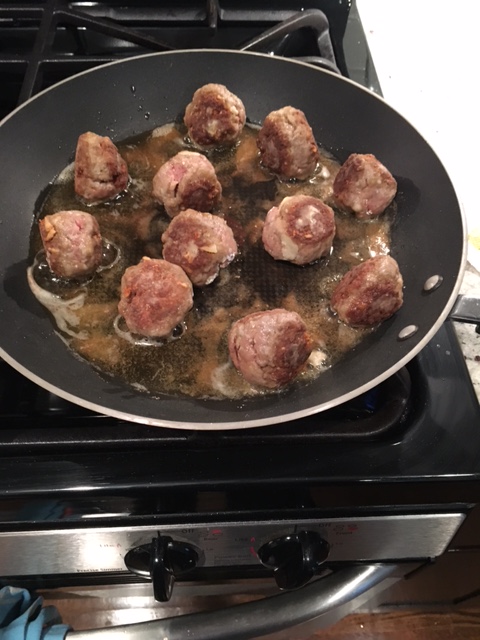
Heat 1/2 cup olive oil in a large skillet. Add 3 cloves of chopped garlic and cook until brown. Remove the garlic and start adding the meatballs. Get them nice and brown! I usually turn them three times to get each meatball crispy and brown all over. The meatballs will continue to cook while simmering in the sauce, so no need to cook them all the way through at this point. If you are splitting up the work of this recipe and making your meatballs the day before, put them in the fridge and they’ll be all set to plop in to the sauce tomorrow.

Sauce 

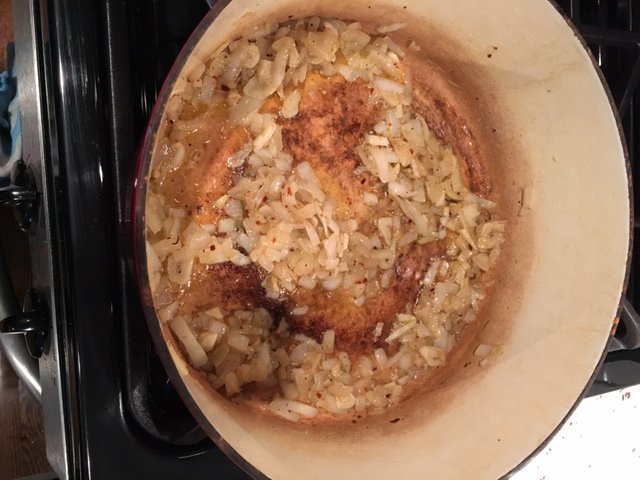
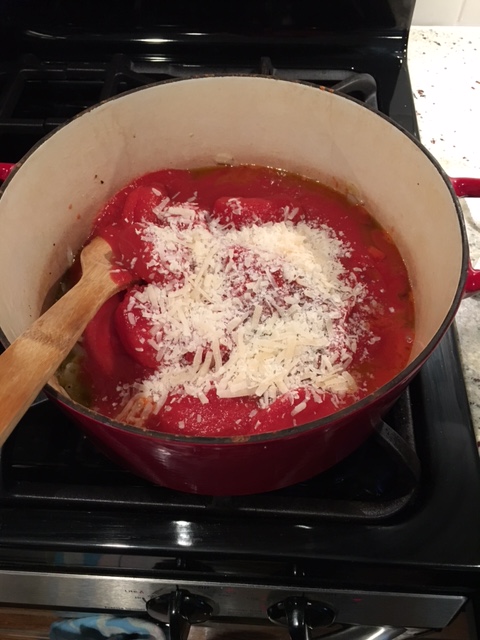
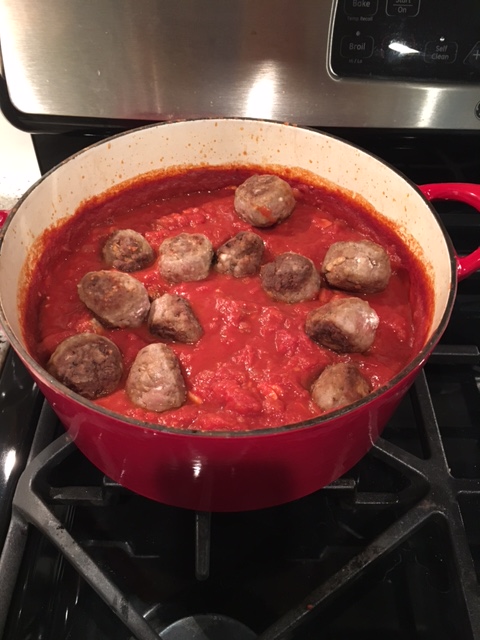
Heat 1/4 cup olive oil in a large dutch oven or heavy pot. Add 4 cloves of chopped garlic, the chopped onion, 1/4 teaspoon red pepper flakes, 1/4 teaspoon black pepper, the anchovy fillets and cook for 5 to 7 minutes. Add the cans of tomato, red wine, 1/2 cup grated Parmesan, tomato paste and 1 tablespoon salt. Then add 1 cup of water and bring to a boil. Add the meatballs, lower the heat and simmer for two hours.

Add the basil just before you are ready to serve and combine the cooked spaghetti with the sauce. Invite some friends over and enjoy!

img_1375img_1376img_1377img_1381img_1382img_1383img_1384img_1385img_1386img_1387img_1388img_1389img_1390


Chili Oil

Happy Chili Day!

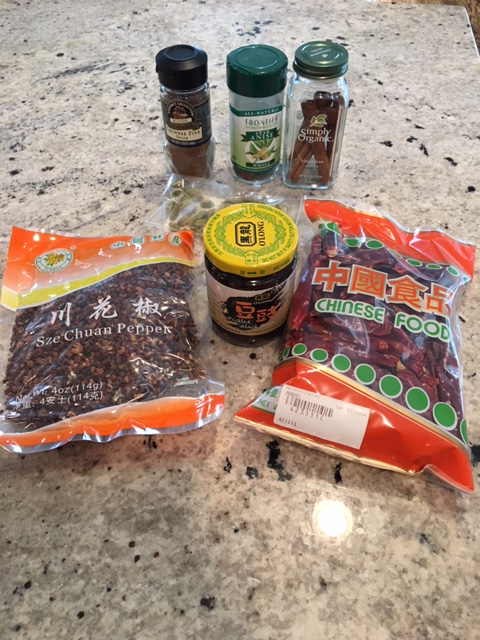
To honor the chili pepper today, I have attempted to replicate the house made chili oil you find at the table at asian restaurants. I mostly followed Gary Wiviot‘s recipe from LTH with some added spices – cinnamon, star anise and cardamom. I found a bag of dried Szechuan peppers and fermented beans at the local asian grocery store. Only three more days of Grape Harvest month!

Chili Oil

1 cup of dried Szechuan chilis (I found whole and ground them coarsely at home)

2 tbs fermented black beans

1 cinnamon stick

1 star anise pod

5 cardamom pods

1 tsp salt

1/2 tsp sugar

2 cloves garlic, sliced

1 1/2 cup corn oil (or peanut oil)

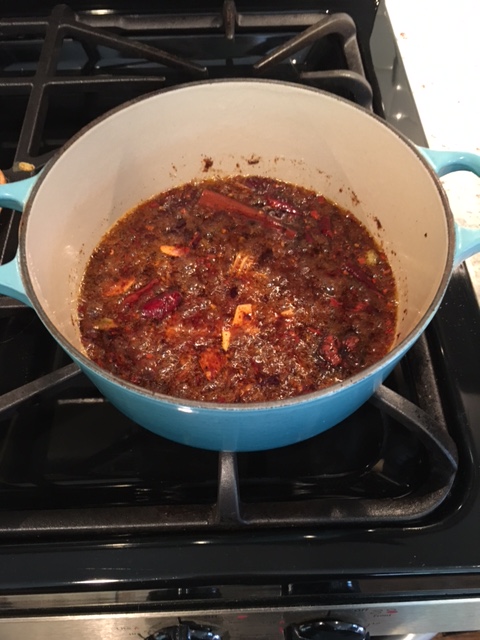
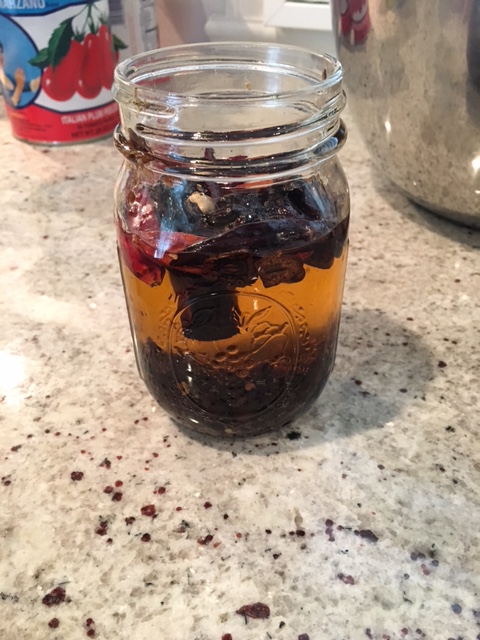
Heat the oil in a heavy pot until slightly hot. G Wiv suggests using a deep fry thermometer and hitting 220. Add the chilis, beans, cinnamon, star anise, cardamom and garlic. Simmer for 30 minutes, but do not let the spices burn. Remove from heat and add salt and sugar. Once cool, store in the fridge. Enjoy!
img_1367img_1368img_1370